
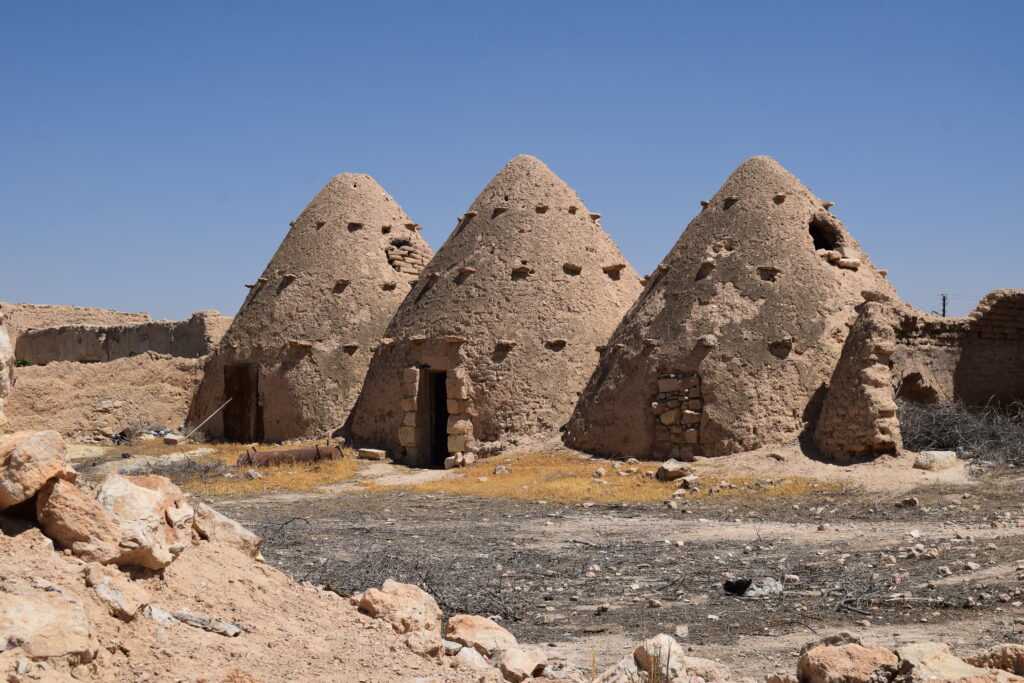
What if one country could take you through more than 10,000 years of human history in a single journey?
From the world’s oldest continuously inhabited cities and magnificent Roman theatres to medieval castles, ancient caravan cities, UNESCO World Heritage Sites, and breathtaking Mediterranean and mountain landscapes, Syria offers one of the richest collections of historical and cultural attractions anywhere on Earth.
Whether you’re exploring the bustling souqs of Damascus, wandering through the ancient citadel of Aleppo, standing among the majestic ruins of Palmyra, discovering the Roman grandeur of Busra, or uncovering the forgotten kingdoms of Ebla, Kingdom of Mari, and Ugarit, every destination reveals another chapter in the story of civilization.
This guide brings together the best places to visit in Syria, covering the country’s most remarkable cities, archaeological treasures, religious landmarks, castles, museums, coastal destinations, and natural landscapes. Whether you’re planning your first visit or looking to explore beyond the well-known highlights, this comprehensive guide will help you discover the very best that Syria has to offer.
Why Visit Syria?
Syria is one of the world’s oldest continuously inhabited countries and one of the most historically significant destinations in the Middle East. For thousands of years, it has served as a crossroads between Asia, Europe, and Africa, leaving behind an extraordinary concentration of archaeological sites, religious landmarks, and living cultural traditions.
Whether you are interested in ancient civilizations, architecture, photography, or authentic cultural experiences, Syria offers a journey unlike anywhere else.
Here are just a few reasons why Syria deserves a place on every history lover’s travel list:
- Six UNESCO World Heritage Sites, including the Ancient City of Damascus, the Ancient City of Aleppo, Busra, Palmyra, the Ancient Villages of Northern Syria, and Krak des Chevaliers with Qal’at Salah El-Din.
- More than 10,000 years of history, from Neolithic settlements to Aramean, Roman, Byzantine, Islamic, and Ottoman civilizations.
- Some of the world’s oldest continuously inhabited cities, where ancient streets, traditional markets, and historic neighborhoods remain part of everyday life.
- Exceptional religious heritage, with mosques, churches, monasteries, and pilgrimage sites that reflect centuries of coexistence between different faiths.
- Remarkable archaeological treasures, including Roman theaters, Crusader castles, Byzantine villages, ancient temples, and medieval hospitals.
- Authentic local experiences, from bustling souqs and traditional craftsmanship to regional cuisine and the renowned hospitality of Syrian communities.
- A diverse landscape, where Mediterranean beaches, fertile valleys, mountain villages, deserts, and archaeological ruins can all be explored within a single journey.
What makes Syria truly unique is that its heritage is not confined to museums or archaeological parks. Ancient monuments stand alongside vibrant neighborhoods, traditional markets continue to operate as they have for centuries, and many historic religious sites remain active places of worship. Visiting Syria is not simply about seeing historic landmarks—it’s about experiencing a civilization that continues to live through its people, traditions, and cultural identity.
In this guide, you’ll discover the most remarkable places to visit across Syria, from world-famous UNESCO landmarks to lesser-known destinations that reveal the country’s extraordinary cultural and natural diversity. Whether you’re planning your first visit or looking to explore beyond the iconic highlights, this guide will help you build an unforgettable itinerary.
Damascus
Damascus is one of the most important places to visit in Syria. As one of the world’s oldest continuously inhabited cities and a UNESCO World Heritage Site, it offers an exceptional blend of ancient history, religious heritage, traditional markets, and living culture that few destinations in the world can match.
Whether you’re visiting Syria for archaeology, architecture, photography, or cultural experiences, Damascus should be your first stop.
Here, history is not confined to monuments—it is woven into the fabric of everyday life.
Unlike many historic cities where archaeological sites are separated from modern life, Damascus remains a living city where residents continue to work, worship, and trade within centuries-old neighborhoods. This unique combination of living heritage and remarkable historical monuments makes Damascus an unforgettable introduction to Syria.
Umayyad Mosque (Great Mosque of Damascus)
The Umayyad Mosque is the top attraction in Damascus and one of the most important places to visit in Syria. Located in the heart of the UNESCO-listed Old City, it is renowned for its extraordinary history, remarkable architecture, and profound religious significance.
Built between 705 and 715 CE during the reign of the Umayyad Caliph Al-Walid ibn Abd al-Malik, the mosque occupies a site that has served as a place of worship for nearly three millennia. Before the mosque was constructed, the site was home to the Roman Temple of Jupiter, followed by the Cathedral of Saint John the Baptist during the Byzantine period. The Umayyad Mosque incorporated elements of these earlier structures, making it one of history’s most remarkable examples of architectural continuity.
Today, the mosque is celebrated as one of the earliest masterpieces of Islamic architecture. Its vast marble courtyard, elegant minarets, monumental prayer hall, and surviving sections of early Islamic mosaics illustrate the artistic achievements of the Umayyad era and established a model for congregational mosques across the Islamic world.
Visitor Information
| Information | Details |
| Location | Old City of Damascus, Syria |
| Recommended Visit Time | Approximately 45–60 minutes |
| Entrance Fee | An entrance fee applies for foreign visitors . Women who require an abaya to meet the dress code may rent one at the entrance for 25,000 SYP |
| Opening Hours | Opening times may vary depending on prayer schedules and religious occasions. Visitors should check current access times before visiting. |
| Dress Code | Dress modestly, remove your shoes before entering the prayer hall, and respect worshippers at all times. |
| Photography | Follow the instructions of mosque staff and avoid disturbing worshippers during prayer. |
| Best Time to Visit | Early morning or late afternoon for a quieter atmosphere and softer natural light. |
| Nearby Attractions | Al-Hamidiyah Souq, Khan As’ad Pasha, Azm Palace, Damascus Citadel |
Aramya Tip:
Combine your visit with a walk through Al-Hamidiyah Souq and the surrounding streets to experience the historic heart of Damascus on foot.
Al-Hamidiyah Souq
Al-Hamidiyah Souq is the most famous traditional market in Syria and one of the country’s most iconic places to visit. Stretching through the heart of Damascus’ UNESCO-listed Old City, this historic covered bazaar offers far more than shopping, it is where centuries of commerce, craftsmanship, and everyday Syrian life come together.
Dating back to the late nineteenth century during the Ottoman period, Al-Hamidiyah Souq was built along one of Damascus’ principal commercial routes and remains the city’s busiest traditional marketplace. Its distinctive metal roof, originally designed to provide shade while allowing natural light inside, stretches for hundreds of meters and creates one of the most recognizable streets in Syria.
Today, the souq is lined with hundreds of shops selling everything from handmade crafts and traditional textiles to spices, jewelry, soaps, sweets, and souvenirs. It is also home to some of Damascus’ oldest family-owned businesses, many of which have been serving customers for generations. Walking through the market offers visitors an opportunity not only to shop but also to experience the atmosphere of one of the oldest continuously operating commercial districts in the world.
Visitor Information
| Information | Details |
| Location | Old City of Damascus, Syria |
| Recommended Visit Time | Approximately 45–90 minutes |
| Entrance Fee | Free |
| Opening Hours | Most shops operate daily, although individual opening hours may vary. |
| Best For | Traditional shopping, handicrafts, local food, photography, and cultural experiences |
| Photography | Photography is generally permitted. Always ask permission before photographing shopkeepers or customers. |
| Best Time to Visit | Morning for a quieter experience or late afternoon when the market becomes livelier. |
| Nearby Attractions | Umayyad Mosque, Khan As’ad Pasha, Azm Palace, Damascus Citadel |
Aramya Tip:
Take your time exploring the smaller side alleys branching off the main market, they often hide traditional workshops and local businesses that many visitors overlook.
Khan As’ad Pasha
Khan As’ad Pasha is the finest surviving Ottoman caravanserai in Syria and one of the most impressive examples of Ottoman commercial architecture in the Middle East. Located just a short walk from Al-Hamidiyah Souq, it offers visitors a fascinating glimpse into Damascus’ role as one of the region’s most important trading cities.
Built between 1751 and 1753 CE by As’ad Pasha al-Azm, the Ottoman governor of Damascus, the khan served as a luxurious inn and commercial hub for merchants travelling along regional trade routes. Traders arriving from cities across the Ottoman Empire and beyond would store their goods, conduct business, and stay overnight within its secure walls, making the khan an essential part of Damascus’ commercial life.
The building is widely admired for its elegant Ottoman architecture. Its spacious central courtyard, surrounded by two levels of arcades and crowned by a series of distinctive domes, demonstrates the wealth and craftsmanship of eighteenth-century Damascus. Today, Khan As’ad Pasha remains one of the city’s best-preserved historic buildings and an outstanding example of the architectural legacy of the Ottoman period.
Visitor Information
| Information | Details |
| Location | Old City of Damascus, Syria |
| Historical Period | Ottoman (1751–1753 CE) |
| Recommended Visit Time | Approximately 30-45 minutes |
| Entrance Fee | A small admission fee may apply. As visitor policies can change, check with your guide or local tourism office before your visit. |
| Opening Hours | 09:00–15:30; Tuesday closed (Opening hours may vary depending on exhibitions, restoration work, or cultural events.) |
| Photography | Photography is generally permitted unless temporary restrictions apply. |
| Best Time to Visit | Morning or early afternoon, when natural light beautifully illuminates the courtyard. |
| Nearby Attractions | Al-Hamidiyah Souq, Umayyad Mosque, Azm Palace |
Aramya Tip:
Stand beneath the central courtyard and look upward to appreciate the symmetry of the domes, a perspective many visitors miss while walking through the building.
Azm Palace
Azm Palace is the finest surviving example of a traditional Damascene palace and one of the architectural highlights of Damascus’ UNESCO-listed Old City. Built in the eighteenth century, it offers visitors a rare opportunity to explore the elegance of Ottoman residential architecture and learn about traditional life in Damascus.
The palace was commissioned in 1749 by As’ad Pasha al-Azm, the Ottoman governor of Damascus, as his official residence. Designed around a series of courtyards with marble paving, fountains, gardens, and richly decorated reception halls, the palace reflects the wealth, craftsmanship, and refined urban lifestyle of eighteenth-century Damascus. Its architecture combines black basalt, white limestone, and sandstone in the distinctive ablaq style that characterizes many of the city’s historic buildings.
Following the end of the Ottoman period, the palace served several administrative functions before undergoing extensive restoration. Since 1954, it has housed the Museum of Arts and Popular Traditions, where visitors can explore exhibits illustrating traditional Syrian domestic life, crafts, costumes, musical instruments, and reception rooms furnished in the style of an affluent Damascene household. The palace remains one of the best-preserved historic residences in the Middle East and provides valuable insight into the cultural heritage of Damascus.
Visitor Information
| Information | Details |
| Location | Old City of Damascus, Syria |
| Historical Period | Ottoman (completed in 1749 CE) |
| Recommended Visit Time | Approximately 45–60 minutes |
| Entrance Fee | Admission fee applies. Ticket prices may change, so check locally before your visit. |
| Opening Hours | Opening hours are subject to change. Check locally for the latest visitor information. |
| Photography | Photography is generally permitted unless temporary restrictions apply. |
| Best Time to Visit | Morning or early afternoon for a quieter visit and better natural lighting in the courtyards. |
| Nearby Attractions | Umayyad Mosque, Al-Hamidiyah Souq, Khan As’ad Pasha, Damascus Citadel |
Aramya Tip:
Don’t rush through the reception halls. Pay close attention to the intricate wooden ceilings, marble decoration, and courtyard layout, they reveal many of the defining features of traditional Damascene architecture.
Damascus Citadel
Damascus Citadel is one of the oldest and most significant fortified monuments in Syria. Standing at the northwestern edge of Damascus’ UNESCO-listed Old City, it reflects centuries of military architecture and the strategic importance of one of the world’s oldest continuously inhabited cities.
The present citadel was largely rebuilt during the Seljuk period in the late eleventh century under Atsiz ibn Uwaq and was extensively strengthened by Nur al-Din Zangi and later by the Ayyubids, including Saladin and his successors. Although the fortress has undergone numerous alterations over the centuries, much of its surviving structure dates to the twelfth and thirteenth centuries, when Damascus was one of the principal political and military centers of the Islamic world.
Constructed with massive stone walls, defensive towers, and fortified gates, the citadel formed an integral part of the city’s defensive system. It withstood repeated sieges, including attacks by the Mongols and Timur’s forces, while continuing to evolve under successive dynasties. Today, although large sections of the interior are not regularly accessible to visitors due to ongoing conservation work, the exterior walls, towers, and monumental gateways remain among the finest surviving examples of medieval Islamic military architecture in the region.
Visitor Information
| Information | Details |
| Location | Northwestern corner of the Old City of Damascus, Syria |
| Historical Period | Primarily Seljuk and Ayyubid (11th–13th centuries CE) |
| Recommended Visit Time | Approximately 30-45 minutes |
| Entrance Fee | Visitor access and admission policies may vary depending on conservation work. Check locally before your visit. |
| Opening Hours | Public access is subject to restoration activities and may not always be available. |
| Photography | Photography of the exterior is generally possible from surrounding streets. Access to interior areas may be restricted. |
| Best Time to Visit | Early morning or late afternoon for comfortable temperatures and softer light. |
| Nearby Attractions | Al-Hamidiyah Souq, Umayyad Mosque, Azm Palace |
Aramya Tip:
Walk around the northern and western sides of the citadel to appreciate the scale of its fortifications and defensive towers, as the exterior provides the best overall views of the monument.
Bab Touma
Bab Touma is one of the seven historic gates of the Old City of Damascus and the gateway to one of the city’s most distinctive neighborhoods. Known for its historic churches, traditional houses, and lively streets, the district offers visitors a unique perspective on Damascus’ rich religious and cultural diversity.
The original gate was built during the Roman period and was dedicated to the goddess Venus. Following the spread of Christianity, it became known as Bab Touma, or the Gate of Saint Thomas, in honor of the apostle traditionally associated with the area. Like much of Damascus’ fortifications, the gate was rebuilt and modified several times, particularly during the medieval Islamic period, while preserving its role as one of the principal entrances to the city.
Today, Bab Touma is best known for the historic Christian Quarter that extends beyond the gate. The neighborhood is home to churches representing several Christian traditions, including the Greek Orthodox, Syriac Orthodox, Melkite Greek Catholic, and Armenian communities. Narrow stone-paved streets, traditional Damascene houses with interior courtyards, artisan shops, cafés, and restaurants create an atmosphere that differs noticeably from the bustling markets of the western Old City while remaining an integral part of Damascus’ living heritage.
Visitor Information
| Information | Details |
| Location | Eastern section of the Old City of Damascus, Syria |
| Historical Period | Originally Roman; rebuilt during the medieval Islamic period |
| Recommended Visit Time | Approximately 45–90 minutes |
| Entrance Fee | Free |
| Opening Hours | The neighborhood is accessible throughout the day. Individual churches, museums, cafés, and businesses operate on their own schedules. |
| Photography | Photography is generally permitted in public areas. Ask permission before photographing people or inside churches. |
| Best Time to Visit | Late afternoon or early evening, when the streets are at their most vibrant. |
| Nearby Attractions | Straight Street (Via Recta), House of Saint Ananias, Mardam Bey House, Old City churches |
Aramya Tip:
Wander beyond the main streets to discover hidden courtyards, historic houses, and small cafés that showcase the neighborhood’s unique character.
Straight Street (Via Recta)
Straight Street is the oldest continuously used street in Damascus and one of the city’s most historically significant thoroughfares. Originally laid out during the Roman period, it has connected the eastern and western gates of the Old City for nearly two millennia and remains an important part of Damascus’ urban fabric.
Known in antiquity as the Via Recta (“Straight Street”), the road was constructed after the Roman conquest of Damascus in the first century BC as the city’s principal east-west axis. The street is mentioned in the Acts of the Apostles (9:11), where Saul of Tarsus—later known as Saint Paul—was instructed to go to the “street called Straight” following his conversion on the road to Damascus. This biblical reference makes it one of the few surviving streets specifically mentioned in the New Testament.
Although modern buildings and centuries of reconstruction have altered its appearance, parts of the original Roman alignment remain clearly visible. Today, Straight Street stretches from Bab al-Jabiya in the west toward Bab Touma in the east, passing through neighborhoods that reflect Damascus’ long history. Visitors will encounter traditional Damascene houses, historic churches, workshops, cafés, and small shops, experiencing a street that has served as the city’s principal artery for almost two thousand years.
Visitor Information
| Information | Details |
| Location | Extends across the Old City of Damascus from Bab al-Jabiya toward Bab Touma |
| Historical Period | Roman origin (1st century BC), continuously developed through successive periods |
| Recommended Visit Time | Approximately 45–90 minutes |
| Entrance Fee | Free |
| Opening Hours | Open at all times as a public street. Individual businesses and religious sites have their own opening hours. |
| Photography | Photography is generally permitted in public spaces. Respect local privacy and obtain permission before photographing people or inside religious buildings. |
| Best Time to Visit | Morning or late afternoon for a comfortable walking experience or Late afternoon and early evening, when the street comes alive with cafés, restaurants, and local residents, offering one of the most enjoyable walking experiences in the Old City. |
| Nearby Attractions | Bab Touma, House of Saint Ananias, Umayyad Mosque, Al-Hamidiyah Souq |
Aramya Tip:
Rather than walking the entire street without stopping, take time to explore the narrow alleys branching off either side, they reveal hidden courtyards, historic houses, and layers of Damascus that many visitors overlook.
Sulaymaniyya Takiyya
Sulaymaniyya Takiyya is the finest example of Ottoman architecture in Damascus. Built in the sixteenth century on the banks of the Barada River, the complex combines elegant architecture with centuries of religious, social, and commercial history.
The complex was commissioned by Sultan Suleiman the Magnificent and designed by the renowned Ottoman architect Mimar Sinan, whose works include some of the greatest monuments of the Ottoman Empire. Construction began in 1554 and was completed during the reign of Suleiman, creating a large charitable complex (külliye) that served travelers, pilgrims, students, and members of the local community.
Centered around a spacious courtyard, the complex includes a mosque distinguished by its large central dome and slender minarets, residential quarters that originally accommodated pilgrims traveling to Mecca, and service buildings that supported the charitable foundation. The harmonious proportions, alternating stonework, arcaded courtyards, and restrained decoration reflect the classical Ottoman architectural style that Mimar Sinan helped define.
Today, Al-Takiyya al-Sulaymaniyah remains one of Damascus’ most recognizable landmarks. Parts of the complex continue to serve religious purposes, while sections of the surrounding buildings house workshops and shops where visitors can discover traditional Syrian handicrafts, including woodwork, textiles, copperware, and other locally made products.
Visitor Information
| Information | Details |
| Location | Shukri al-Quwatli Street, near the Barada River, Damascus, Syria |
| Historical Period | Ottoman (16th century CE) |
| Recommended Visit Time | Approximately 45–60 minutes |
| Entrance Fee | Access to the courtyard is generally free. Some exhibitions or workshops may operate independently. |
| Opening Hours | Opening hours may vary, particularly for the mosque and artisan workshops. Check locally before your visit. |
| Photography | Photography is generally permitted in outdoor areas. Always respect restrictions inside the mosque and ask permission before photographing artisans. |
| Best Time to Visit | Morning or late afternoon, when temperatures are more comfortable and the courtyard is beautifully illuminated by natural light. |
| Nearby Attractions | National Museum of Damascus, Hejaz Railway Station, Old City of Damascus |
Aramya Tip:
Take time to browse the artisan workshops surrounding the courtyard. They offer an opportunity to see traditional Syrian craftsmanship while supporting local makers.
Damascus National Museum
Damascus National Museum is Syria’s oldest and most important archaeological museum. Its collections span thousands of years of history, offering visitors an exceptional introduction to the civilizations that flourished across the country, from prehistoric communities to the Islamic era.
Founded in 1919, the museum was established to preserve Syria’s archaeological heritage as excavations across the country uncovered remarkable discoveries from sites such as Ebla, Kingdom of Mari, Ugarit, Palmyra, Dura-Europos, and Apamea. Over the decades, it has grown into the country’s principal archaeological museum, housing one of the most significant collections in the Middle East.
One of the museum’s most celebrated features is the reconstructed façade of the Umayyad desert palace of Qasr al-Hayr al-Gharbi, relocated stone by stone to form the museum’s monumental entrance. Inside, the galleries present sculptures, mosaics, inscriptions, manuscripts, coins, ceramics, glassware, and everyday objects that illustrate the cultural diversity of ancient Syria. Among the highlights are the exceptionally well-preserved third-century synagogue frescoes from Dura-Europos, regarded as some of the earliest surviving narrative paintings from the ancient world.
Visitor Information
| Information | Details |
| Location | Shukri al-Quwatli Street, Damascus, Syria |
| Historical Period | Museum established in 1919; collections span prehistoric to Islamic periods |
| Recommended Visit Time | Approximately 2–3 hours |
| Entrance Fee | Admission policies and ticket prices may change. Check locally before your visit. |
| Opening Hours | Opening hours may vary. Check locally for the latest visitor information. |
| Photography | Personal photography is generally permitted in most galleries. Flash photography may be prohibited, and some exhibits may have additional restrictions. |
| Best Time to Visit | Morning, when galleries are generally quieter and more comfortable for extended visits. |
| Nearby Attractions | Al-Takiyya al-Sulaymaniyah, Hejaz Railway Station, Barada River |
Aramya Tip:
Begin your visit with the reconstructed façade of Qasr al-Hayr al-Gharbi, then follow the galleries chronologically. This approach provides a clearer understanding of Syria’s historical development before exploring its archaeological sites in person.
Al Hijaz Train Station
Al Hijaz Train Station is one of Damascus’ most distinctive Ottoman landmarks and a symbol of one of the most ambitious railway projects in Middle Eastern history. Built in the early twentieth century, the station served as the principal departure point for the famous Hejaz Railway connecting Damascus with Medina.
The station was inaugurated in 1917 as the new terminal for the Hejaz Railway, a line originally launched in 1908 to facilitate travel and pilgrimage from Damascus toward the holy cities of the Arabian Peninsula. Commissioned during the reign of Sultan Abdul Hamid II, the railway represented both an engineering achievement and an important strategic project of the late Ottoman Empire.
Designed by the Spanish architect Fernando de Aranda, the station blends European architectural influences with traditional Islamic decorative elements. Its elegant stone façade, large arched windows, carved details, and spacious entrance hall reflect the architectural character of the late Ottoman period while remaining one of the city’s most recognizable public buildings.
Although the railway no longer operates as it once did, the station continues to stand as a reminder of Damascus’ historic role as a crossroads linking the Levant with the Arabian Peninsula. Its architecture, historic significance, and central location make it an interesting stop for visitors exploring the city’s more recent heritage beyond the ancient walls.
Visitor Information
| Information | Details |
| Location | Hejaz Square, central Damascus, Syria |
| Historical Period | Late Ottoman (completed in 1917) |
| Recommended Visit Time | Approximately 20–30 minutes |
| Entrance Fee | The exterior can be viewed freely. Access to interior areas may vary depending on operational and administrative conditions. |
| Opening Hours | As an active public building, visitor access may vary. Check locally before planning an interior visit. |
| Photography | Photography of the exterior is generally possible from public areas. Restrictions may apply inside the building. |
| Best Time to Visit | Morning or late afternoon for the best natural light on the station’s historic façade. |
| Nearby Attractions | National Museum of Damascus, Al-Takiyya al-Sulaymaniyah, Barada River |
Aramya Tip:
Admire the station from the square before stepping inside. The richly decorated façade is one of the finest surviving examples of late Ottoman civic architecture in Damascus and is often overlooked by visitors focused on the Old City.
Hanania Church (Chapel of Saint Ananias)
Hidden beneath the streets of Damascus’ Old City, the Hanania Church is traditionally believed to mark the home of Saint Ananias of Damascus, the disciple who baptized Saul—later known as Saint Paul—following his dramatic conversion. Revered in Christian tradition as the first Bishop of Damascus, Ananias remains one of the city’s most significant early Christian figures.
According to the Acts of the Apostles (9:10–19), Ananias was instructed in a vision to visit Saul after his encounter on the road to Damascus. He restored Saul’s sight and baptized him, marking the beginning of Paul’s Christian ministry. Christian tradition later identified Ananias as one of the Seventy Disciples and the first Bishop of Damascus. The site traditionally associated with his home became an early place of Christian worship and is regarded as one of the oldest surviving Christian chapels in the city. Although the present structure has been rebuilt and restored over the centuries, its underground setting preserves the atmosphere of an early Christian sanctuary.
Visitors descend a short flight of stone steps into a modest underground chapel built of stone, with vaulted ceilings and simple furnishings that reflect its spiritual rather than architectural significance. Unlike Damascus’ grand mosques and palaces, the appeal of the House of Saint Ananias lies in its intimate scale and profound connection to the beginnings of Christianity. The quiet interior provides a peaceful retreat from the busy streets above and offers visitors a tangible link to one of the New Testament’s most important narratives.
Visitor Information
| Information | Details |
| Location | Near Straight Street and Bab Touma, Old City of Damascus |
| Historical Period | Traditional site associated with the 1st century AD; the present chapel reflects later reconstructions. |
| Recommended Visit Time | Approximately 20–30 minutes |
| Entrance Fee | Admission policies may vary. Check locally before your visit. |
| Opening Hours | Opening hours may vary depending on church services and local arrangements. Check locally before visiting. |
| Photography | Photography may be restricted inside the chapel. Always ask for permission before taking photographs. |
| Best Time to Visit | Morning or early afternoon, when the chapel is generally quieter. |
| Nearby Attractions | Bab Touma, Straight Street (Via Recta), Mardam Bey House |
Aramya Tip:
Visit the chapel together with Straight Street to follow the route associated with Saul’s conversion. Together, the two sites offer one of the most meaningful introductions to Damascus’ early Christian heritage.
Historic Damascene Houses
Beyond its famous mosques and bustling souqs, Damascus is renowned for its elegant courtyard houses, many of which rank among the finest examples of traditional urban architecture in the Middle East. Built around shaded courtyards with marble fountains, stained-glass windows, and richly painted wooden interiors, these residences offer a glimpse into the refined lifestyle of Damascus’ wealthy families during the Ottoman period.
Among the city’s best-known historic homes are Maktab Anbar, a magnificent 19th-century mansion that now serves as a cultural center; Beit Nizam, celebrated for its beautifully preserved courtyard and ornate interiors; Mardam Bey House, showcasing the elegance of traditional Damascene domestic architecture; Alamir Abd al-Kader al-Jazairi House, the residence of the renowned Algerian leader who spent his later years in Damascus; and Nizar Qabbani House, the birthplace of one of the Arab world’s most celebrated poets. Together, these houses preserve the artistic traditions, craftsmanship, and architectural identity that have defined Damascus for centuries.
Rural Damascus (Rif Dimashq Governorate)
Beyond the bustling streets of Syria’s capital lies Rural Damascus, a region of dramatic mountains, ancient monasteries, historic towns, and some of the country’s most treasured cultural and religious landmarks. From the Aramaic-speaking village of Maaloula to the cliffside Monastery of Deir Mar Musa and the renowned pilgrimage town of Saydnaya, the region offers unforgettable day trips that combine spectacular scenery with thousands of years of history.
Nestled within the Qalamoun Mountains and surrounding highlands, Rural Damascus has served for centuries as a crossroads connecting Damascus with northern Syria and the Mediterranean. Its rugged landscapes provided natural settings for monasteries, caravan routes, and mountain villages that preserved unique traditions, languages, and architectural heritage across successive civilizations.
Today, the region attracts visitors seeking experiences beyond the capital. Whether exploring ancient monasteries, walking through historic mountain villages, or enjoying panoramic views over the Anti-Lebanon Mountains, Rural Damascus reveals a quieter and deeply authentic side of Syria that perfectly complements a visit to Damascus itself.
Maaloula
Nestled among the dramatic limestone cliffs of the Qalamoun Mountains, Maaloula is one of Syria’s most extraordinary destinations. Internationally renowned for preserving Western Neo-Aramaic, one of the last surviving dialects descended from the language traditionally associated with Jesus Christ, the town is also home to some of the country’s oldest monasteries and most spectacular mountain scenery.
Located about 60 kilometres northeast of Damascus, Maaloula has been inhabited for thousands of years and remains one of the Middle East’s most important centers of Christian heritage. The town’s stone houses, built directly into the mountainside, blend seamlessly with the surrounding cliffs, creating one of Syria’s most distinctive landscapes. For centuries, its inhabitants have preserved unique religious traditions, local customs, and the Western Neo-Aramaic language, giving Maaloula exceptional cultural and linguistic significance.
Today, visitors can explore the historic Monastery of Saint Sergius and Bacchus (Mar Sarkis), one of the oldest continuously active monasteries in Syria, visit the Monastery of Saint Thecla (Mar Takla) with its famous mountain gorge and spring, wander through the narrow streets of the old town, and enjoy breathtaking views across the Qalamoun Mountains. Together, these landmarks make Maaloula one of the country’s most rewarding destinations for history, culture, and religious tourism.
Visitor Information
| Information | Details |
| Location | Qalamoun Mountains, approximately 60 km northeast of Damascus, Syria |
| Historical Period | Historic Christian mountain town renowned for its Western Neo-Aramaic heritage and ancient monasteries |
| Recommended Visit Time | Half a day |
| Entrance Fee | The town is free to explore. Individual monasteries may have their own visitor policies. |
| Opening Hours | Public areas are accessible throughout the day. Monasteries may have specific visiting hours. |
| Photography | Photography is generally permitted in public areas. Please ask permission before photographing inside churches and monasteries. |
| Best Time to Visit | Spring and autumn offer the most pleasant weather for exploring the town and surrounding mountain trails. |
Aramya Tip:
Walk between the Monastery of Saint Thecla and the old town through the famous gorge if it’s accessible during your visit. It’s one of Maaloula’s most memorable experiences, combining dramatic natural scenery with the town’s rich spiritual heritage.
Saydnaya
Perched on a hill overlooking the Qalamoun Mountains, Saydnaya is one of the Middle East’s most important Christian pilgrimage destinations. Revered for its ancient monasteries, sacred traditions, and panoramic mountain views, the town has welcomed pilgrims from around the world for centuries.
Located approximately 30 kilometres north of Damascus, Saydnaya has been a center of Christian worship since the early Byzantine period. According to tradition, the Monastery of Our Lady of Saydnaya was founded by the Byzantine Emperor Justinian I in the 6th century AD after receiving a divine vision directing him to establish a monastery on the hilltop. Over the centuries, Saydnaya became one of the most significant pilgrimage sites in the region, particularly for followers of the Greek Orthodox Church.
Today, visitors can explore the Monastery of Our Lady of Saydnaya, home to the revered icon of the Virgin Mary (Shaghoura), traditionally believed to have been painted by Saint Luke the Evangelist. Beyond the monastery, the town’s winding streets, historic churches, and sweeping views across the Anti-Lebanon Mountains create a peaceful atmosphere that reflects centuries of continuous religious devotion and cultural heritage.
Visitor Information
| Information | Details |
| Location | Approximately 30 km north of Damascus, Rural Damascus Governorate, Syria |
| Historical Period | Historic Christian pilgrimage town centered around the 6th-century Monastery of Our Lady of Saydnaya |
| Recommended Visit Time | 1–2 hours |
| Entrance Fee | Free |
| Opening Hours | The monastery is generally open daily. Visiting hours may vary during religious services and feast days. |
| Photography | Photography is generally permitted in outdoor areas. Please ask permission before photographing inside the monastery or chapel. |
| Best Time to Visit | Spring and autumn offer pleasant weather and excellent visibility across the surrounding mountains. |
Aramya Tip:
Combine Saydnaya with Maaloula on the same day. The short driving distance between the two towns makes them one of Syria’s most rewarding day trips, offering an exceptional introduction to the country’s Christian heritage and mountain landscapes.
Deir Mar Musa el-Habashi (Monastery of Saint Moses the Abyssinian)
Dramatically perched on a mountainside overlooking the Syrian steppe, Deir Mar Musa el-Habashi is one of Syria’s most extraordinary monasteries. Combining breathtaking scenery, medieval art, and centuries of monastic tradition, the monastery offers visitors a unique experience unlike any other religious site in the country.
Located near the town of Al-Nabk, about 80 kilometres north of Damascus, the monastery dates back to at least the 11th century, although local tradition associates the site with Saint Moses the Abyssinian, a hermit believed to have lived in the region centuries earlier. The monastery became renowned for its remarkable collection of 11th- and 12th-century wall paintings, regarded among the finest surviving examples of medieval Christian art in Syria.
Reaching the monastery requires climbing a long stone staircase carved into the mountainside, rewarding visitors with sweeping views across the surrounding valleys. Inside, beautifully preserved frescoes, ancient inscriptions, and a peaceful atmosphere reflect centuries of spiritual life. Today, Deir Mar Musa is also internationally recognized for its commitment to cultural dialogue, hospitality, and the preservation of Syria’s religious heritage, making it one of the country’s most inspiring destinations.
Visitor Information
| Information | Details |
| Location | Near Al-Nabk, Qalamoun Mountains, approximately 80 km north of Damascus, Syria |
| Historical Period | Historic monastery with origins dating to at least the 11th century; renowned for its medieval frescoes |
| Recommended Visit Time | 2–3 hours |
| Entrance Fee | Admission policies may vary. Donations are often welcomed to support the monastery. |
| Opening Hours | Visiting hours may vary depending on religious activities. Check locally before your visit. |
| Photography | Photography is generally permitted outdoors. Ask permission before photographing inside the church. |
| Best Time to Visit | Spring and autumn provide the most comfortable conditions for climbing to the monastery. |
Aramya Tip:
Wear comfortable walking shoes and carry water. The climb to the monastery is part of the experience, and the panoramic views from the top are well worth the effort.
Aleppo
One of the world’s oldest continuously inhabited cities, Aleppo has stood at the crossroads of civilizations for more than four millennia. As a UNESCO World Heritage Site, the city is celebrated for its monumental citadel, historic souqs, centuries-old mosques and churches, and one of the richest culinary traditions in the Middle East.
For centuries, Aleppo flourished as a major commercial hub linking the Mediterranean with Mesopotamia, Anatolia, and Persia. Its strategic location along the Silk Roads attracted merchants, scholars, and travelers from across the world, shaping a city where diverse cultures, religions, and architectural styles coexisted. This rich heritage is reflected in its fortified citadel, bustling markets, traditional khans, elegant courtyard houses, and remarkable collection of Islamic and Christian monuments.
Citadel of Aleppo
Rising dramatically above the surrounding city, the Citadel of Aleppo is one of the largest and best-preserved medieval fortresses in the world. Dominating Aleppo’s skyline from its natural limestone hill, it has served as a military stronghold, royal residence, and symbol of the city’s enduring historical significance for thousands of years.
Archaeological evidence suggests that the hill was occupied as early as the 3rd millennium BC, while its strategic importance grew under successive civilizations, including the Hittites, Greeks, Romans, Byzantines, and Ayyubids. Much of the citadel’s present appearance dates to the Ayyubid period in the late 12th and early 13th centuries, particularly during the reign of Al-Zahir Ghazi, son of Saladin, who transformed it into one of the most formidable defensive complexes of the medieval Islamic world.
Visitors enter the citadel by crossing its monumental stone bridge, which leads to an impressive fortified gateway renowned for its sophisticated defensive design. Inside the walls, the complex contains palaces, mosques, baths, wells, underground passages, military structures, and archaeological remains spanning several civilizations. From the summit, panoramic views extend across Aleppo’s UNESCO-listed Old City, offering one of the city’s most iconic viewpoints.
Visitor Information
| Information | Details |
| Location | Central Aleppo, overlooking the Old City |
| Historical Period | Occupied since at least the 3rd millennium BC; largely rebuilt during the Ayyubid period (12th–13th centuries) |
| Recommended Visit Time | 1.5–2 hours |
| Entrance Fee | Admission policies may vary. Check locally before your visit. |
| Opening Hours | Opening hours may vary. Check locally before visiting. |
| Photography | Photography is generally permitted for personal use. Some areas may have restrictions. |
| Best Time to Visit | Early morning or late afternoon for cooler temperatures and panoramic views. |
| Nearby Attractions | Aleppo Souqs, Great Mosque of Aleppo, Khan al-Wazir |
Aramya Tip:
Walk all the way to the highest accessible point inside the citadel. The sweeping views over the Old City reveal the scale of Aleppo’s historic urban fabric and are among the best photo opportunities in Syria.
Great Mosque of Aleppo
Located at the heart of Aleppo’s Old City, the Great Mosque of Aleppo is one of Syria’s most important Islamic landmarks. For centuries, it has served as the city’s principal congregational mosque, reflecting Aleppo’s religious, architectural, and cultural significance through successive Islamic periods.
The mosque was originally commissioned by the Umayyads in the early 8th century during the reign of Caliph Sulayman ibn Abd al-Malik and later expanded and renovated by the Zengids, Ayyubids, Mamluks, and Ottomans. Its architecture reflects this long history, combining spacious arcaded courtyards, finely carved stone façades, elegant prayer halls, and decorative elements added over nearly a thousand years.
One of the mosque’s most celebrated features is its distinctive 11th-century minaret, renowned for its intricate stone carvings and Kufic inscriptions, which long stood as one of the finest examples of medieval Islamic architecture in Syria. The mosque is also traditionally believed to house the Tomb of Prophet Zechariah (Zakariya), making it an important destination for both worshippers and visitors interested in Islamic history.
Visitor Information
| Information | Details |
| Location | Old City of Aleppo, adjacent to the historic souqs |
| Historical Period | Originally built during the Umayyad period (8th century) and expanded over successive Islamic dynasties |
| Recommended Visit Time | 30–45 minutes |
| Entrance Fee | Admission policies may vary. Check locally before your visit. |
| Opening Hours | Visiting hours may vary, particularly during prayer times. Check locally before your visit. |
| Photography | Photography is generally permitted for personal use. Be respectful of worshippers and avoid photographing people without permission. |
| Best Time to Visit | Outside peak prayer times for a quieter visit and better opportunities to appreciate the architecture. |
| Nearby Attractions | Citadel of Aleppo, Aleppo Souqs, Khan al-Wazir |
Aramya Tip:
Take time to observe the architectural details around the courtyard. They reflect centuries of craftsmanship and reveal how different Islamic dynasties contributed to the mosque’s evolution.
Aleppo Souqs
Stretching for several kilometers through the heart of the Old City, the Souqs of Aleppo form one of the largest and oldest covered market complexes in the Middle East. For centuries, these interconnected markets served as a thriving commercial center where merchants from Asia, Europe, and the Arab world exchanged silk, spices, textiles, soap, jewelry, and countless other goods.
The origins of the souqs date back to the medieval period, although many sections were expanded and rebuilt during the Mamluk and Ottoman eras. Organized by trade, each market specialized in particular products, giving rise to names such as Souq al-Attarine (the Spice Market), Souq al-Haddadin (the Blacksmiths’ Market), and Souq al-Saboun (the Soap Market). This carefully planned arrangement reflected Aleppo’s role as one of the most important trading cities along the Silk Roads.
Walking through the covered stone passageways reveals an atmosphere shaped by centuries of commerce and craftsmanship. Traditional workshops continue to produce handmade goods, while historic khans, vaulted ceilings, and carved stone façades preserve the character of one of the Islamic world’s greatest marketplaces. Exploring the souqs remains one of the most authentic ways to experience Aleppo’s cultural heritage and everyday life.
Visitor Information
| Information | Details |
| Location | Old City of Aleppo, surrounding the Great Mosque and extending toward the Citadel |
| Historical Period | Primarily developed during the Mamluk and Ottoman periods, with medieval origins |
| Recommended Visit Time | 1–2 hours |
| Entrance Fee | Free |
| Opening Hours | Most shops are generally open during daytime hours, though individual businesses set their own schedules. |
| Photography | Photography is generally permitted. Always ask permission before photographing shopkeepers or artisans. |
| Best Time to Visit | Morning or late afternoon, when the markets are most active. |
| Nearby Attractions | Great Mosque of Aleppo, Citadel of Aleppo, Khan al-Wazir |
Aramya Tip:
Don’t rush through the main passageways. Some of the most interesting workshops and historic caravanserais are found along the smaller side alleys branching off the main souqs.
Al Wazir Caravanserai (Khan al-Wazir)
Nestled within the historic souqs of Aleppo, Al Wazir Caravanserai is one of the city’s finest surviving Ottoman caravanserais. Built to accommodate merchants traveling along regional and international trade routes, it stands as a remarkable reminder of Aleppo’s role as one of the Middle East’s greatest commercial centers.
The khan was commissioned in 1682 by Wazir Ibrahim Pasha, the Ottoman governor of Aleppo, during a period of economic prosperity. Like many caravanserais of its time, it combined commercial and residential functions under one roof. Merchants could store valuable goods on the ground floor while lodging in rooms surrounding the upper galleries, all within a secure, enclosed complex centered around a spacious stone courtyard.
Architecturally, Al Wazir Caravanserai reflects the elegance of late Ottoman civic architecture. Its finely dressed limestone façades, graceful arcades, vaulted storage rooms, and symmetrical courtyard create a harmonious space that balances functionality with aesthetic refinement. Today, the khan remains one of the best places to appreciate the scale and sophistication of Aleppo’s historic trading infrastructure while exploring the surrounding souqs.
Visitor Information
| Information | Details |
| Location | Within the historic Souqs of Aleppo, Old City |
| Historical Period | Ottoman period (1682); one of Aleppo’s finest surviving caravanserais |
| Recommended Visit Time | 20–30 minutes |
| Entrance Fee | Free |
| Opening Hours | Accessible during daytime hours. Opening times may vary. |
| Photography | Photography is generally permitted for personal use. |
| Best Time to Visit | Morning or late afternoon, when the courtyard is beautifully illuminated by natural light. |
| Nearby Attractions | Aleppo Souqs, Great Mosque of Aleppo, Citadel of Aleppo |
Aramya Tip:
Step into the central courtyard and look up at the surrounding arcades. The design illustrates how Ottoman caravanserais seamlessly combined commerce, hospitality, and security within a single architectural complex.
Madrasat al-Firdaws
Located just outside the walls of Aleppo’s Old City, Madrasat al-Firdaws is widely regarded as one of the masterpieces of Ayyubid architecture in Syria. Renowned for its harmonious proportions, elegant stonework, and tranquil courtyard, the madrasa reflects the artistic and intellectual flourishing of Aleppo during the 13th century.
The madrasa was commissioned in 1236 AD by Dayfa Khatun, the influential Ayyubid queen who ruled Aleppo as regent for her young grandson. Her patronage transformed the city into an important center of learning, architecture, and public works. Madrasat al-Firdaws was established as both a religious school and a place of worship, serving generations of students studying Islamic sciences.
The complex is celebrated for its refined architectural design. Built from finely cut limestone, it features a spacious central courtyard surrounded by arcades, richly carved portals, elegant domes, and a beautifully proportioned prayer hall. Unlike the monumental scale of Aleppo’s citadel or the bustling atmosphere of its markets, Madrasat al-Firdaws offers a sense of serenity that allows visitors to appreciate the sophistication of medieval Islamic architecture in a peaceful setting.
Visitor Information
| Information | Details |
| Location | Southwest of Aleppo’s Old City, Syria |
| Historical Period | Ayyubid period (1236 AD); one of the finest surviving medieval madrasas in Syria |
| Recommended Visit Time | 30–45 minutes |
| Entrance Fee | Free |
| Opening Hours | Opening hours may vary. Check locally before visiting. |
| Photography | Photography is generally permitted for personal use unless otherwise indicated. |
| Best Time to Visit | Morning or late afternoon, when soft natural light highlights the stone architecture. |
| Nearby Attractions | Old City of Aleppo, Citadel of Aleppo |
Aramya Tip:
Spend a few quiet moments in the central courtyard. Its balanced proportions, subtle ornamentation, and open arcades make it one of the most graceful examples of Ayyubid architecture in Syria.
Bimaristan Arghan
Among Aleppo’s lesser-known treasures, Bimaristan Arghan stands as one of the finest surviving medieval hospitals in the Islamic world. More than a place of healing, it reflects the remarkable advances in medicine, architecture, and public welfare achieved during the Mamluk period.
Bimaristan was founded in 1354 AD by Emir Arghun al-Kamili, the Mamluk governor of Aleppo. Like other great Islamic hospitals of the medieval era, it provided free medical care to patients regardless of their social background while also serving as a center for medical education. Historical accounts describe specialized wards, pharmacies, bathing facilities, and carefully designed courtyards intended to promote comfort and recovery.
The building itself is an architectural masterpiece. Its monumental entrance, intricately carved stonework, vaulted halls, and central courtyard demonstrate the sophistication of Mamluk civic architecture. Water features and natural ventilation were thoughtfully incorporated into the design, reflecting medieval Islamic principles that linked architecture with physical and mental well-being. Today, the bimaristan offers visitors a fascinating insight into the scientific achievements and humanitarian traditions that shaped Aleppo for centuries.
Visitor Information
| Information | Details |
| Location | Old City of Aleppo, Syria |
| Historical Period | Mamluk period (1354 AD); one of the best-preserved medieval Islamic hospitals |
| Recommended Visit Time | 30–45 minutes |
| Entrance Fee | Free |
| Opening Hours | Opening hours may vary. Check locally before visiting. |
| Photography | Photography is generally permitted for personal use unless otherwise indicated. |
| Best Time to Visit | Morning or early afternoon for the best natural light inside the courtyard. |
| Nearby Attractions | Great Mosque of Aleppo, Aleppo Souqs, Khan al-Wazir |
Aramya Tip:
Look beyond the architecture and imagine the building’s original purpose. The thoughtful layout, flowing water, and open courtyard illustrate how medieval Islamic hospitals were designed to support both physical healing and patient well-being.
Historic Churches of Aleppo
Aleppo is home to one of the oldest and most diverse Christian communities in the Middle East. Scattered throughout the historic Al-Jdeideh Quarter, the city’s churches reflect centuries of religious coexistence and preserve a remarkable collection of Armenian, Syriac, Greek Orthodox, Maronite, and Catholic heritage.
Many of Aleppo’s churches date back to the 15th and 16th centuries, although several stand on sites associated with even earlier Christian traditions. Their architecture combines local limestone construction with influences from Byzantine, Armenian, and Ottoman craftsmanship, while richly decorated interiors feature carved wooden iconostases, painted domes, marble altars, and centuries-old religious manuscripts.
Among the most significant churches are the Forty Martyrs Armenian Cathedral, one of the oldest Armenian churches in Syria; the Cathedral of Saint Elijah, the seat of the Syriac Catholic Archbishopric of Aleppo; the Greek Orthodox Cathedral of the Dormition; and the Maronite Cathedral of Saint Elias. Together, these landmarks illustrate Aleppo’s long-standing role as one of the Middle East’s most important centers of Christian heritage and remain an essential part of the city’s cultural identity.
Visitor Information
| Information | Details |
| Location | Primarily located in Al-Jdeideh Quarter, Old City of Aleppo |
| Historical Period | Mainly 15th–17th centuries, with several churches built on earlier Christian sites |
| Recommended Visit Time | 1–2 hours to explore several churches on foot |
| Entrance Fee | Most churches can be visited free of charge. Donations are welcome where accepted. |
| Opening Hours | Opening hours vary according to church services and religious events. Check locally before visiting. |
| Photography | Photography is generally permitted in courtyards. Always ask permission before photographing inside churches or during religious services. |
| Best Time to Visit | Morning or late afternoon, outside service times, for a quieter experience. |
| Nearby Attractions | Al-Jdeideh Quarter, Aleppo Souqs |
Aramya Tip:
Explore the churches on foot through the narrow streets of Al-Jdeideh. The neighborhood itself is one of Aleppo’s architectural treasures, with beautifully preserved stone houses, quiet courtyards, and historic squares connecting many of the city’s most important Christian landmarks.
Monastery of Saint Simeon (Deir Semaan / Qal’at Sim’an)
Perched on a limestone hill northwest of Aleppo, Deir Semaan (Qal’at Sim’an) is home to one of the world’s oldest and most remarkable Christian pilgrimage sites. Built around the column of Saint Simeon Stylites, the vast Byzantine complex represents one of the greatest achievements of early Christian architecture and is part of UNESCO’s Ancient Villages of Northern Syria World Heritage Site.
Saint Simeon Stylites (c. 390–459 AD) became one of Christianity’s most influential ascetics after spending nearly four decades living atop a stone column in prayer and contemplation. His extraordinary way of life attracted thousands of pilgrims from across the Byzantine Empire, transforming the hill into one of the most important pilgrimage destinations of Late Antiquity.
Following his death, Emperor Zeno commissioned the construction of an immense pilgrimage complex around the saint’s column between 476 and 490 AD. Rather than following the traditional basilica layout, the architects designed four monumental basilicas radiating from a central octagonal courtyard, where the remains of Saint Simeon’s column still stand today. This innovative cruciform plan, combined with finely carved limestone façades and expansive open courtyards, makes Qal’at Sim’an one of the masterpieces of early Byzantine architecture.
Today, visitors can walk among the impressive ruins of churches, monasteries, baptisteries, and pilgrimage buildings while enjoying sweeping views across the limestone massif of northern Syria. The remarkable scale of the complex, together with its exceptional state of preservation, offers a rare insight into the spiritual, architectural, and cultural legacy of the early Byzantine world.
Visitor Information
| Information | Details |
| Location | About 35 km northwest of Aleppo, Syria |
| Historical Period | Early Byzantine period (late 5th century AD); part of UNESCO’s Ancient Villages of Northern Syria World Heritage Site |
| Recommended Visit Time | 1–1.5 hours |
| Entrance Fee | Admission policies may vary. Check locally before your visit. |
| Opening Hours | Opening hours may vary. Check locally before visiting. |
| Photography | Photography is generally permitted for personal use. |
| Best Time to Visit | Spring and autumn offer the most pleasant weather. Early morning or late afternoon provides the best light for photography. |
| Nearby Attractions | Ancient Villages of Northern Syria (including Serjilla and Al-Bara) |
Aramya Tip:
Walk around the entire central octagonal courtyard rather than viewing the column from one side. This allows you to appreciate the unique four-basilica design, unlike any other early Christian church complex in the world.
Idlib
Located in northwestern Syria, Idlib Governorate is home to one of the richest concentrations of archaeological heritage in the Middle East. From the royal archives of Ebla to the remarkably preserved Dead Cities and one of the region’s finest mosaic museums, the governorate offers an extraordinary journey through more than five thousand years of human history.
Occupying a strategic position between the Mediterranean coast, the Orontes Valley, and northern Mesopotamia, Idlib has long served as a crossroads of civilizations. The region flourished under the Eblaite, Hellenistic, Roman, Byzantine, and Islamic periods, leaving behind an exceptional archaeological landscape. Its fertile plains, limestone massifs, and historic trade routes encouraged the growth of prosperous cities, villages, monasteries, and agricultural settlements whose remains continue to provide invaluable insights into the ancient world.
Today, visitors can discover the legendary Bronze Age city of Ebla (Tell Mardikh), explore the UNESCO-listed Ancient Villages of Northern Syria, commonly known as the Dead Cities, and admire the outstanding mosaic collection of the Maarat al-Numan Museum. Together, these sites make Idlib one of Syria’s most rewarding destinations for archaeology, ancient history, and cultural heritage.
Ebla (Tell Mardikh)
Located about 55 kilometres southwest of Aleppo near the city of Saraqib, Ebla (Tell Mardikh) was one of the greatest kingdoms of the ancient Near East. Flourishing during the 3rd millennium BC, the city emerged as a powerful political, commercial, and cultural center whose influence extended across Syria, Mesopotamia, Anatolia, and the eastern Mediterranean.
Founded during the 4th millennium BC, Ebla reached the height of its prosperity between 2500 and 2300 BC, when it became the capital of a wealthy kingdom controlling extensive trade networks throughout the region. The city’s international importance was dramatically confirmed in 1974–1975, when Italian archaeologists led by Paolo Matthiae uncovered the spectacular Royal Archives, containing approximately 17,000 cuneiform tablets and fragments. Written primarily in the Eblaite and Sumerian languages, these texts transformed scholars’ understanding of politics, diplomacy, commerce, religion, and daily life in the Bronze Age, making Ebla one of the most important archaeological discoveries of the modern era.
Today, visitors can explore the remains of the Royal Palace (Palace G), monumental city walls, temples, ceremonial areas, and the archaeological mound that once formed the heart of one of the ancient world’s greatest cities. Although the famous cuneiform tablets are preserved in museums, the site itself offers a remarkable opportunity to stand where one of humanity’s earliest kingdoms flourished and where one of the largest written archives of the Bronze Age was brought to light.
Visitor Information
| Information | Details |
| Location | Tell Mardikh, approximately 55 km southwest of Aleppo, Idlib Governorate, Syria |
| Historical Period | Capital of the Kingdom of Ebla and home to one of the world’s largest Bronze Age cuneiform archives |
| Recommended Visit Time | 1–1.5 hours |
| Entrance Fee | Free |
| Opening Hours | All day |
| Photography | Photography is generally permitted for personal use. |
| Best Time to Visit | Spring and autumn provide the most comfortable weather for exploring the open archaeological site. |
Aramya Tip:
Before your visit, take a few minutes to learn about the Royal Archives. Knowing that thousands of cuneiform tablets were discovered beneath the palace will help you appreciate why Ebla is regarded as one of the most influential archaeological discoveries of the twentieth century.
Maart Museum
Housed within a magnificent 16th-century Ottoman caravanserai, Maart Museum (the Maarat al-Numan Museum) was home to one of the world’s finest collections of Roman and Byzantine mosaics. Combining elegant Islamic architecture with extraordinary archaeological treasures, the museum stood as one of Syria’s most important cultural institutions and remains a symbol of the country’s rich artistic heritage.
The museum occupies the historic Khan Murad Pasha, a beautifully preserved caravanserai commissioned in 1565 AD by the Ottoman governor Murad Pasha to accommodate merchants and travelers along the trade routes linking Aleppo, Damascus, and the Mediterranean. In the twentieth century, the khan was carefully restored and transformed into an archaeological museum, providing an exceptional setting for displaying masterpieces recovered from villas, churches, and public buildings across northern Syria.
Before its closure, the museum was internationally renowned for its outstanding collection of Roman and Byzantine floor mosaics, many regarded among the finest ever discovered in the eastern Mediterranean. Their intricate geometric patterns, mythological scenes, hunting depictions, and Christian imagery reflected the artistic sophistication of Late Antiquity. Together with the historic khan itself, these collections made the Maarat al-Numan Museum one of Syria’s most remarkable destinations for lovers of archaeology, architecture, and ancient art.
Visitor Information
| Information | Details |
| Location | Maarat al-Numan, Idlib Governorate, Syria |
| Historical Period | 16th-century Ottoman caravanserai housing one of Syria’s most important collections of Roman and Byzantine mosaics |
| Recommended Visit Time | 1–2 hours |
| Entrance Fee | Admission policies depend on the museum’s operational status. Check locally before planning your visit. |
| Opening Hours | Verify current opening status and visiting hours before traveling. |
| Photography | Photography policies depend on the museum’s operational status and local regulations. |
| Best Time to Visit | Spring and autumn are ideal for visiting Maarat al-Numan and the surrounding region. |
Aramya Tip:
Even if you’re primarily interested in archaeology, take time to appreciate the khan itself. Its spacious courtyard, arcades, and stone architecture are masterpieces of Ottoman civic architecture and form an integral part of the museum experience.
Dead Cities (Ancient Villages of Northern Syria)
Scattered across the limestone massif of northwest Syria, the Dead Cities comprise one of the world’s most remarkable archaeological landscapes. This vast region contains hundreds of abandoned settlements dating from the Roman and Byzantine periods, while its most significant sites are protected as the UNESCO World Heritage property known as the Ancient Villages of Northern Syria.
These settlements flourished between the 1st and 7th centuries AD, benefiting from fertile land, olive cultivation, and prosperous regional trade. Their wealth is reflected in the exceptional preservation of stone-built houses, churches, monasteries, bathhouses, inns, olive presses, and public buildings. Unlike many ancient cities that were continuously rebuilt over time, these villages were gradually abandoned, leaving behind remarkably intact examples of rural life from Late Antiquity.
Today, the wider Dead Cities region includes hundreds of archaeological settlements, while the UNESCO World Heritage Site protects around forty representative villages distributed across eight archaeological parks. Among the most notable are Serjilla, renowned for its remarkably preserved residential quarter and bath complex; Al-Bara, one of the largest and wealthiest Byzantine settlements; Qalb Lozeh, home to one of the finest surviving early Christian churches in the Middle East; Ruweiha, known for its well-preserved churches and domestic architecture; Jeradeh, distinguished by its monumental stone houses; and Deir Sunbul, where impressive churches and monastic remains illustrate the region’s rich religious heritage.
Together, these villages provide an unparalleled record of everyday life, architecture, agriculture, and religious practice in Byzantine Syria, making the Dead Cities one of the country’s most rewarding destinations for travelers interested in archaeology, history, and early Christian heritage.
Visitor Information
| Information | Details |
| Location | Limestone Massif, northwest Syria (primarily in Idlib and western Aleppo governorates) |
| Historical Period | Roman and Byzantine periods (1st–7th centuries AD); UNESCO World Heritage Site |
| Recommended Visit Time | Half a day to a full day, depending on the number of villages visited |
| Entrance Fee | Free |
| Opening Hours | Most sites can be visited during daylight hours. Access conditions may vary. |
| Photography | Photography is generally permitted for personal use. |
| Best Time to Visit | Spring and autumn, when the weather is ideal for exploring multiple outdoor archaeological sites. |
Aramya Tip:
Don’t limit your visit to a single village. Exploring two or three different sites reveals the remarkable diversity of architecture, religious monuments, and daily life that made the Dead Cities one of the Byzantine world’s most prosperous rural regions.
Serjilla
Among the many settlements that make up Syria’s Dead Cities, Serjilla is the best preserved and one of the most rewarding to explore. Its remarkably intact streets, houses, baths, churches, and olive presses provide an extraordinary window into everyday life in a prosperous Byzantine village more than fifteen centuries ago.
Founded during the Roman period and flourishing between the 4th and 6th centuries AD, Serjilla prospered through olive cultivation, trade, and agriculture. Unlike many ancient settlements that evolved into modern towns, Serjilla was gradually abandoned during the early Islamic period, leaving behind an exceptionally complete urban landscape that has survived with relatively few later alterations.
Walking through Serjilla feels less like visiting an archaeological site and more like exploring a deserted town. Visitors can wander along ancient streets lined with multi-storey stone houses, public baths, taverns, churches, cisterns, and olive presses that once supported a thriving local economy. The outstanding state of preservation allows visitors to appreciate not only individual monuments but also the layout and daily rhythm of a Byzantine rural community.
Visitor Information
| Information | Details |
| Location | Jabal al-Zawiya, Idlib Governorate, northwest Syria |
| Historical Period | Roman and Byzantine periods (1st–7th centuries AD); part of UNESCO’s Ancient Villages of Northern Syria |
| Recommended Visit Time | 1–1.5 hours |
| Entrance Fee | Free |
| Opening Hours | The archaeological site is generally accessible during daylight hours. |
| Photography | Photography is generally permitted for personal use. |
| Best Time to Visit | Spring and autumn, when mild temperatures make walking through the extensive ruins more comfortable. |
| Nearby Attractions | Al-Bara, Qalb Lozeh, Deir Sunbul |
Aramya Tip:
Climb to one of the elevated points overlooking the village before exploring on foot. Seeing the entire settlement from above makes it much easier to understand its remarkably preserved urban layout.
Al-Bara
One of the largest and most prosperous settlements among Syria’s Dead Cities, Al-Bara preserves the remains of a thriving Byzantine community that flourished through agriculture, olive oil production, and regional trade. Today, its extensive ruins offer visitors an exceptional opportunity to explore one of the most impressive ancient villages in the Limestone Massif.
Al-Bara reached its peak between the 4th and 6th centuries AD, when it became an important regional center supported by fertile farmland and extensive olive groves. Unlike many smaller villages in the region, Al-Bara developed into a substantial settlement with churches, monasteries, villas, tomb towers, olive presses, and public buildings, reflecting the wealth of its inhabitants during the Byzantine period.
One of the site’s most distinctive features is its remarkable collection of pyramid-shaped funerary monuments, which are unique within the Dead Cities and demonstrate the prosperity and craftsmanship of the local community. Visitors can also explore the remains of several early Christian churches, spacious stone-built residences, and agricultural installations that illustrate how closely daily life was connected to olive cultivation and the surrounding landscape. The sheer scale of Al-Bara makes it one of the best places to appreciate the economic and architectural sophistication of rural Byzantine Syria.
Visitor Information
| Information | Details |
| Location | Jabal al-Zawiya, Idlib Governorate, northwest Syria |
| Historical Period | Roman and Byzantine periods (1st–7th centuries AD); part of UNESCO’s Ancient Villages of Northern Syria |
| Recommended Visit Time | 1–1.5 hours |
| Entrance Fee | Free |
| Opening Hours | The archaeological site is generally accessible during daylight hours. |
| Photography | Photography is generally permitted for personal use. |
| Best Time to Visit | Spring and autumn, when the weather is ideal for exploring the extensive ruins on foot. |
| Nearby Attractions | Serjilla, Qalb Lozeh, Deir Sunbul |
Aramya Tip:
Don’t focus only on the churches. Walk toward the residential quarter and the funerary monuments to appreciate the size of the settlement and understand why Al-Bara was one of the wealthiest villages in Byzantine Syria.
Qalb Lozeh Church
Standing among the limestone hills of northwest Syria, the Qalb Lozeh Church is widely regarded as one of the finest surviving examples of early Byzantine church architecture. Built in the 5th century, its elegant proportions and innovative design influenced the development of church architecture across the Byzantine world and are believed by many architectural historians to have inspired elements of later Romanesque churches in Europe.
Constructed around 460 AD, the church served the prosperous Christian community of Qalb Lozeh during a period when the villages of northern Syria flourished through agriculture and regional trade. Unlike many churches of Late Antiquity, its imposing limestone façade remains remarkably intact, featuring twin towers, monumental arched entrances, finely carved capitals, and carefully proportioned windows that demonstrate the exceptional craftsmanship of Byzantine stonemasons.
Although the wooden roof has long since disappeared, much of the church’s architectural framework survives, allowing visitors to appreciate its original scale and design. The harmonious balance between its monumental exterior and spacious interior has made Qalb Lozeh one of the most studied churches of the early Christian period and one of the architectural highlights of the UNESCO-listed Ancient Villages of Northern Syria.
Visitor Information
| Information | Details |
| Location | Qalb Lozeh village, Jabal al-A’la, Idlib Governorate, northwest Syria |
| Historical Period | Early Byzantine period (c. 460 AD); part of UNESCO’s Ancient Villages of Northern Syria World Heritage Site |
| Recommended Visit Time | 30–45 minutes |
| Entrance Fee | Free |
| Opening Hours | The archaeological site is generally accessible during daylight hours. |
| Photography | Photography is generally permitted for personal use. |
| Best Time to Visit | Spring and autumn offer the most comfortable conditions for exploring the site. |
| Nearby Attractions | Al-Bara, Serjilla, Deir Sunbul |
Aramya Tip:
Walk around both the front façade and the side elevations. The church’s architectural harmony is best appreciated from multiple angles, revealing why it is considered one of the masterpieces of early Byzantine architecture.
Hama
Nestled along the banks of the Orontes River, Hama is one of Syria’s oldest continuously inhabited cities and a destination renowned for its giant wooden waterwheels, riverside promenades, and rich historical heritage. While often overshadowed by Damascus and Aleppo, Hama offers visitors a unique blend of ancient engineering, Islamic architecture, and easy access to some of Syria’s most important archaeological sites, including Apamea.
For thousands of years, Hama has flourished as an agricultural and commercial center thanks to the fertile lands surrounding the Orontes Valley. The city’s strategic location made it an important settlement for successive civilizations, including the Arameans, Seleucids, Romans, Byzantines, Ayyubids, Mamluks, and Ottomans. This long history is reflected in its historic mosques, traditional markets, elegant courtyard houses, and the iconic norias that have become the city’s enduring symbol.
Today, Hama provides a more relaxed atmosphere than Syria’s larger cities while serving as an excellent base for exploring central Syria. Visitors can stroll along the riverbanks, admire centuries-old architecture, and easily reach nearby landmarks such as Apamea, Qalaat al-Mudiq, and other archaeological treasures scattered throughout the Orontes Valley.
Norias of Hama
The Norias of Hama are among Syria’s most iconic landmarks and represent one of the finest surviving examples of medieval hydraulic engineering. Towering above the Orontes River, these giant wooden waterwheels have become the enduring symbol of Hama, attracting visitors with their impressive size, distinctive creaking sound, and centuries-old ingenuity.
The exact origins of the norias remain uncertain, although historical evidence suggests that large waterwheels existed in Hama by at least the 12th century during the Ayyubid period, with many of the surviving structures rebuilt and maintained in later centuries. Powered solely by the current of the Orontes River, the wheels lifted water into elevated aqueducts that supplied nearby gardens, agricultural land, fountains, baths, and residential neighborhoods, demonstrating a remarkable understanding of hydraulic engineering long before the advent of modern pumping systems.
Today, seventeen historic norias remain along the Orontes River, ranging in size from smaller wheels to the magnificent Noria al-Muhammadiyah, the largest and most famous, measuring approximately 21 metres (69 feet) in diameter. Walking along the riverside allows visitors to admire these remarkable engineering monuments up close while enjoying one of the most picturesque settings in central Syria.
Visitor Information
| Information | Details |
| Location | Along the Orontes River, central Hama, Syria |
| Historical Period | Medieval hydraulic engineering; most surviving norias date from the Ayyubid, Mamluk, and Ottoman periods |
| Recommended Visit Time | 20-30 minutes |
| Entrance Fee | Free |
| Opening Hours | The riverside is accessible at all times. |
| Photography | Photography is freely permitted. |
| Best Time to Visit | Late afternoon or around sunset, when the riverside is at its most vibrant and the lighting is ideal for photography. |
| Nearby Attractions | Azem Palace, Hama Grand Mosque, Orontes River promenade |
Aramya Tip:
Visit several norias rather than stopping at just one. Each wheel differs in size and setting, while the riverside promenade offers some of the most scenic walks in central Syria. Listen for the characteristic creaking sound of the wooden wheels—an unmistakable part of Hama’s identity for centuries.
Azm Palace (Hama)
Overlooking the Orontes River and the famous Norias of Hama, Azm Palace is one of the city’s finest examples of Ottoman residential architecture. Built in the 18th century for the influential Al-Azem family, the palace reflects the elegance, craftsmanship, and refined lifestyle of one of Syria’s most prominent ruling families.
The palace was commissioned in 1742 AD by As’ad Pasha al-Azem, who later became the Ottoman governor of Damascus and is also remembered for constructing the famous Azem Palace in Damascus. Designed around spacious courtyards with marble fountains, shaded arcades, and richly decorated reception halls, the residence combines traditional Damascene architectural principles with distinctive local craftsmanship found in Hama.
Today, the palace houses the Hama Museum, where visitors can explore archaeological discoveries, traditional artifacts, mosaics, and exhibits illustrating the history of the Orontes Valley from prehistoric times through the Islamic period. The beautifully preserved courtyards, carved limestone façades, painted wooden ceilings, and tranquil gardens make the palace one of Hama’s most rewarding cultural attractions.
Visitor Information
| Information | Details |
| Location | Along the Orontes River, near the Norias of Hama, Syria |
| Historical Period | Ottoman period (1742 AD); residence of the Al-Azem family and home to the Hama Museum |
| Recommended Visit Time | 45–60 minutes |
| Entrance Fee | Admission policies may vary. Check locally before your visit. |
| Opening Hours | Opening hours may vary. Check locally before visiting. |
| Photography | Photography policies may vary inside museum galleries. Ask staff before photographing indoor exhibits. |
| Best Time to Visit | Morning or late afternoon. Combine your visit with a walk along the Orontes River and the nearby Norias. |
| Nearby Attractions | Norias of Hama, Hama Grand Mosque, Orontes River promenade |
Aramya Tip:
Don’t focus only on the museum exhibits. Spend time exploring the courtyards and architectural details—the marble fountain, carved stonework, and painted wooden ceilings offer an authentic glimpse into elite Ottoman domestic architecture in central Syria.
Al Jamea Alkabir (Great Mosque of Hama)
Standing in the heart of Hama’s historic center, Al Jamea Alkabir is one of Syria’s oldest and most significant Islamic monuments. Built on a site that has served as a place of worship for centuries, the mosque reflects the city’s rich architectural heritage and the successive civilizations that shaped its history.
The mosque occupies a site believed to have hosted earlier religious buildings during the Byzantine period, before being converted into a mosque following the Islamic conquest of Syria in the 7th century. Over the centuries, it underwent extensive rebuilding and expansion under the Zengids, Ayyubids, Mamluks, and Ottomans, each contributing architectural elements that remain visible today.
One of the mosque’s most distinctive features is its elegant square minaret, which dates largely to the Mamluk period and stands as one of Hama’s best-known landmarks. Visitors can also admire the spacious courtyard, finely carved stone façades, arcaded walkways, and historic prayer hall, all of which illustrate the evolution of Islamic architecture in central Syria over nearly a millennium.
Visitor Information
| Information | Details |
| Location | Historic city center, Hama, Syria |
| Historical Period | Established on an early Islamic site and expanded between the Zengid, Ayyubid, Mamluk, and Ottoman periods |
| Recommended Visit Time | 30–45 minutes |
| Entrance Fee | Free |
| Opening Hours | Open daily outside prayer times. Visiting hours may vary during religious occasions. |
| Photography | Photography is generally permitted for personal use. Visitors should avoid photographing worshippers without permission. |
| Best Time to Visit | Morning or between prayer times for a quieter visit and better opportunities to appreciate the architecture. |
| Nearby Attractions | Norias of Hama, Azem Palace, Orontes River promenade |
Aramya Tip:
Combine your visit with the nearby Norias and Azem Palace. All three landmarks are within walking distance and together tell the story of Hama’s religious, architectural, and engineering heritage.
Apamea
Located about 55 kilometres northwest of Hama, Apameia was one of the greatest cities of the Hellenistic and Roman worlds. Overlooking the fertile Orontes Valley, it flourished as a political, military, and commercial center, leaving behind one of the most spectacular archaeological landscapes in the Middle East.
The city was founded around 300 BC by Seleucus I Nicator, one of Alexander the Great’s generals, who named it after his wife Apama. As one of the four principal cities of the Seleucid Kingdom, Apamea quickly became an important administrative and military center. Under Roman rule, it expanded into a prosperous metropolis known for its monumental public buildings, elegant colonnaded streets, theatres, baths, temples, and vibrant marketplaces.
Today, Apamea is best known for its magnificent Great Colonnade, which stretches for nearly 2 kilometres and ranks among the longest surviving colonnaded streets of the Roman world. Lined with hundreds of limestone columns—many decorated with distinctive spiral fluting—the avenue once formed the city’s principal thoroughfare. Beyond the colonnade, visitors can explore the remains of the Roman theatre, monumental gateways, churches, residential quarters, and public buildings that reveal the scale and sophistication of one of ancient Syria’s greatest cities.
Visitor Information
| Information | Details |
| Location | Approximately 55 km northwest of Hama, Hama Governorate, Syria |
| Historical Period | Founded in the Hellenistic period (c. 300 BC); flourished under the Seleucids and Romans |
| Recommended Visit Time | 1.5–2 hours |
| Entrance Fee | Free |
| Opening Hours | Open at all times. Daylight hours are recommended for the best experience. |
| Photography | Photography is generally permitted for personal use. |
| Best Time to Visit | Spring and autumn, when mild temperatures are ideal for exploring the open-air archaeological site. |
| Nearby Attractions | Qalaat al-Mudiq, Orontes Valley, Hama |
Aramya Tip:
Walk the full length of the Great Colonnade rather than viewing it from the entrance. Along the way, you’ll notice the distinctive spiral-fluted columns, monumental crossroads, and changing perspectives that reveal the immense scale of this ancient city.
Homs
Located in the heart of western Syria, Homs has long served as a crossroads connecting the country’s major regions. While the city itself is one of Syria’s oldest urban centers, it is best known to international visitors as the gateway to some of the country’s most remarkable historical and natural attractions, including Krak des Chevaliers, Wadi al-Nasara, and the Monastery of Saint George.
Known in antiquity as Emesa, Homs flourished under the Romans as an important political and religious center. The city was famous for the Temple of the Sun dedicated to the god Elagabal, whose cult later reached Rome through the Emperor Elagabalus. Over the centuries, Homs continued to grow under successive Islamic dynasties, becoming an important commercial center linking inland Syria with the Mediterranean coast.
Today, visitors often use Homs as a starting point for exploring the surrounding region rather than limiting their visit to the city itself. From here, travelers can discover the magnificent Krak des Chevaliers, explore the picturesque villages of Wadi al-Nasara, visit the historic Monastery of Saint George (Deir Mar Georges), and enjoy some of western Syria’s most beautiful landscapes, making Homs an ideal base for discovering the country’s rich cultural and historical heritage.
Khalid ibn al-Walid Mosque
With its striking twin minarets and elegant Ottoman architecture, the Khalid ibn al-Walid Mosque is one of Homs’ most recognizable landmarks and one of Syria’s most important Islamic sites. The mosque is dedicated to Khalid ibn al-Walid, the renowned Muslim commander known as the “Sword of Allah,” whose tomb is believed to be located within the complex.
The site has long been associated with the burial of Khalid ibn al-Walid, who spent his final years in Homs after playing a decisive role in the Muslim conquest of Syria. A mosque was established here during the medieval period, while the present building was largely reconstructed between 1908 and 1912 during the late Ottoman era, incorporating elements of an earlier Mamluk structure.
Architecturally, the mosque is distinguished by its large central silver-colored dome, two graceful minarets, and the characteristic ablaq masonry of alternating black basalt and white limestone. Inside, visitors can admire the spacious prayer hall and the ornate mausoleum traditionally associated with Khalid ibn al-Walid, making the mosque both an important place of worship and a destination for those interested in Islamic history.
Visitor Information
| Information | Details |
| Location | Khaldiyah District, Homs, Syria |
| Historical Period | Late Ottoman mosque (1908–1912) built around the traditional tomb of Khalid ibn al-Walid |
| Recommended Visit Time | 20–30 minutes |
| Entrance Fee | Free |
| Opening Hours | Open daily. Visitors should avoid prayer times unless attending worship. |
| Photography | Photography is generally permitted in the courtyard. Ask permission before photographing inside the prayer hall or near the mausoleum. |
| Best Time to Visit | Morning or late afternoon, outside prayer times. |
| Nearby Attractions | Um Al Zenar Church (Um al-Zennar), Al-Nuri Mosque, Old Homs |
Aramya Tip:
Take time to admire the mosque’s distinctive black-and-white stonework from the outside before entering. The contrast between the ablaq masonry, twin minarets, and central dome makes it one of Syria’s finest examples of late Ottoman religious architecture.
Um Al Zenar Church
Hidden within the narrow streets of Old Homs, Um Al Zenar Church is one of the most revered Christian sites in the Middle East. The church is renowned for preserving the Holy Belt, a sacred relic traditionally believed to have belonged to the Virgin Mary, making it an important destination for pilgrims and visitors alike.
According to the tradition of the Syriac Orthodox Church, the church traces its origins to 59 AD, making it one of the oldest surviving Christian places of worship in the region, although the present structure reflects successive phases of rebuilding and restoration over many centuries. In 1953, restoration work beneath the altar uncovered a textile belt preserved inside a protective reliquary. The relic is traditionally identified as the Holy Belt of the Virgin Mary and remains one of the church’s greatest treasures.
Beyond its religious importance, the church offers visitors a remarkable glimpse into Syria’s early Christian heritage. Its stone walls, underground sanctuary, Syriac inscriptions, historic icons, and peaceful courtyard reflect nearly two millennia of continuous worship, making Um al-Zennar one of the most significant Christian landmarks in the country.
Visitor Information
| Information | Details |
| Location | Old Homs, Homs, Syria |
| Historical Period | Syriac Orthodox church traditionally dating to 59 AD; home of the Holy Belt relic |
| Recommended Visit Time | 30–45 minutes |
| Entrance Fee | Free |
| Opening Hours | Opening hours may vary depending on church services. Check locally before your visit. |
| Photography | Photography is generally permitted. Please ask for permission before photographing inside the sanctuary. |
| Best Time to Visit | Morning or outside service times for a quieter visit. |
| Nearby Attractions | Khalid ibn al-Walid Mosque, Al-Nuri Mosque, Old Homs |
Aramya Tip:
Be sure to visit the underground sanctuary, where the Holy Belt relic is traditionally preserved. This sacred space is the spiritual heart of the church and one of the most significant Christian pilgrimage sites in Syria.
Krak des Chevaliers
Perched high above the Homs Gap, Krak des Chevaliers is one of the world’s best-preserved medieval castles and one of Syria’s most iconic landmarks. Designated as a UNESCO World Heritage Site, the fortress is widely regarded as the finest surviving example of Crusader military architecture, attracting historians, architects, and travelers from around the globe.
The site was originally occupied by a Kurdish garrison in the 11th century before being captured by the Knights Hospitaller in 1142 AD, who transformed it into an immense fortified castle. Over the following century, the Hospitallers expanded the fortress into a masterpiece of medieval military engineering, incorporating concentric defensive walls, massive towers, vaulted halls, storerooms, chapels, and sophisticated water-storage systems capable of sustaining long sieges.
Following the Mamluk conquest in 1271 under Sultan Baybars, the castle continued to serve as an important military stronghold, with additional architectural features reflecting the transition from Crusader to Islamic rule. Today, visitors can explore the fortress’s monumental gateways, defensive galleries, great halls, chapel, courtyards, and panoramic ramparts while enjoying breathtaking views across the surrounding mountains and valleys. The remarkable preservation and architectural sophistication of Krak des Chevaliers make it one of the most extraordinary medieval monuments anywhere in the world.
Visitor Information
| Information | Details |
| Location | Homs Governorate, about 65 km west of Homs, Syria |
| Historical Period | Crusader fortress (12th–13th centuries); later expanded and modified during the Mamluk period; UNESCO World Heritage Site |
| Recommended Visit Time | 2–3 hours |
| Entrance Fee | Admission policies may vary. Check locally before your visit. |
| Opening Hours | Opening hours may vary. Check locally before visiting. |
| Photography | Photography is generally permitted for personal use. |
| Best Time to Visit | Spring and autumn offer the most pleasant weather. Early morning or late afternoon provides the best light for photography and panoramic views. |
| Nearby Attractions | Wadi al-Nasara, Saint George Monastery (Deir Mar Georges), Safita |
Aramya Tip:
Allow enough time to explore both the outer and inner defensive walls. Many visitors stop at the main courtyard, but the upper ramparts offer spectacular views and reveal the fortress’s ingenious concentric defense system.
Wadi al-Nasara (Valley of the Christians)
Nestled among the forested hills of western Syria, Wadi al-Nasara—known in English as the Valley of the Christians—is one of the country’s most picturesque regions. Home to dozens of historic villages, monasteries, and churches, the valley offers a unique combination of natural beauty, religious heritage, and traditional Syrian hospitality.
Stretching across the mountains west of Homs, Wadi al-Nasara has been home to Christian communities for centuries. The region is renowned for its peaceful villages, stone-built churches, terraced hillsides, and fertile valleys overlooking the Mediterranean hinterland. Throughout history, its mountainous landscape provided a natural refuge for local communities, helping preserve a rich cultural and religious heritage that remains visible today.
Today, the valley is one of Syria’s most popular destinations for both cultural tourism and nature lovers. Visitors can explore historic monasteries, enjoy panoramic mountain scenery, sample traditional local cuisine, and experience the relaxed atmosphere of villages such as Marmarita, Al-Mishtaya, Kafroun, Habb Namra, and Al-Nasirah. The region also serves as the gateway to several of Syria’s most important religious landmarks, including Saint George Monastery (Deir Mar Georges) and Krak des Chevaliers, making it an ideal destination for travelers seeking both history and natural landscapes.
Visitor Information
| Information | Details |
| Location | Western Homs Governorate, between Homs and the Syrian coast |
| Historical Period | Historic cultural landscape with centuries-old Christian villages, monasteries, and churches |
| Recommended Visit Time | Full day (or longer if exploring multiple villages) |
| Entrance Fee | Free to explore the valley. Individual monasteries or attractions may have their own visitor policies. |
| Opening Hours | The villages are accessible at all times. Individual churches and monasteries may have specific visiting hours. |
| Photography | Photography is generally permitted in public areas. Ask permission before photographing inside churches or monasteries. |
| Best Time to Visit | Spring and autumn, when the valley is at its greenest and temperatures are most comfortable. |
Aramya Tip:
Don’t rush between attractions. Spend time driving through the villages and stopping at scenic viewpoints, the landscapes are just as memorable as the historic monuments.
Saint George Monastery (Deir Mar Georges)
Perched on a hill overlooking the picturesque villages of Wadi al-Nasara, Saint George Monastery (Deir Mar Georges) is one of Syria’s most important Christian pilgrimage sites. Renowned for its spiritual significance, historic architecture, and breathtaking mountain views, the monastery has welcomed pilgrims and visitors for centuries.
According to local tradition, the monastery was founded during the 6th century AD on the site of an earlier Christian sanctuary dedicated to Saint George, one of Christianity’s most venerated saints. Over the centuries, it developed into an important center of worship for the Greek Orthodox Patriarchate of Antioch, attracting pilgrims from Syria and across the Middle East.
The monastery’s present complex combines historic stone architecture with later additions, centered around a peaceful courtyard and a beautifully decorated church. Inside, visitors can admire finely crafted iconostasis panels, traditional Byzantine icons, and one of the monastery’s most treasured relics, a revered relic traditionally associated with Saint George, making the monastery an important destination for both religious pilgrims and those interested in Syria’s Christian heritage.
Beyond its religious importance, the monastery offers magnificent panoramic views across the green hills and villages of Wadi al-Nasara, creating a peaceful setting that blends history, spirituality, and natural beauty.
Visitor Information
| Information | Details |
| Location | Al-Humayra, Wadi al-Nasara, Homs Governorate, Syria |
| Historical Period | Greek Orthodox monastery with origins traditionally dating to the 6th century AD |
| Recommended Visit Time | 45–60 minutes |
| Entrance Fee | Free |
| Opening Hours | Generally open daily. Visiting hours may vary during religious services and feast days. |
| Photography | Photography is generally permitted in outdoor areas. Ask for permission before photographing inside the church. |
| Best Time to Visit | Spring and autumn offer the most pleasant weather and the clearest mountain views. |
| Nearby Attractions | Wadi al-Nasara villages, Krak des Chevaliers, Marmarita |
Aramya Tip:
Dress modestly and, if possible, visit outside service times. This allows you to quietly appreciate the monastery’s architecture, icons, and panoramic setting without disturbing worshippers.
Palmyra
Rising from the heart of the Syrian Desert, Palmyra is one of the world’s greatest archaeological treasures and Syria’s most celebrated ancient city. Recognized as a UNESCO World Heritage Site, the magnificent oasis flourished for centuries as a vital crossroads connecting the Roman Empire with Persia, Arabia, and the Silk Roads, leaving behind one of the most extraordinary collections of classical ruins anywhere in the Middle East.
Known in antiquity as Tadmor, Palmyra occupied a strategic position between the Mediterranean and Mesopotamia, enabling it to prosper as a major caravan city from the 1st to the 3rd centuries AD. Merchants traveling through the desert transported silk, spices, incense, precious stones, and other luxury goods, bringing immense wealth to the city. This prosperity gave rise to a distinctive culture that blended Greco-Roman, Persian, and local Semitic influences, visible in its architecture, art, language, and funerary traditions.
Palmyra is inseparably linked to Queen Zenobia, one of antiquity’s most remarkable rulers. During the 3rd century AD, she transformed the city into the capital of the powerful Palmyrene Empire, extending her authority across much of the eastern Roman world before her eventual defeat by Emperor Aurelian. Today, visitors can walk along the city’s magnificent Great Colonnade, admire the remains of the Temple of Bel, explore the Roman Theatre, the Agora, the Roman Baths, the Arch of Triumph, and the Tariff Court, before continuing to the Valley of the Tombs and Qalaat Ibn Ma’an, which overlooks the entire oasis. Together, these monuments reveal the wealth, engineering, and cultural sophistication that made Palmyra one of the ancient world’s greatest desert cities.
Visitor Information
| Information | Details |
| Location | Tadmor, Homs Governorate, central Syria |
| Historical Period | Major caravan city of the Roman period (1st–3rd centuries AD); UNESCO World Heritage Site |
| Recommended Visit Time | Half a day to a full day |
| Entrance Fee | Free |
| Opening Hours | Generally open daily |
| Photography | Photography is generally permitted for personal use. |
| Best Time to Visit | Spring and autumn are ideal. Early morning and late afternoon provide cooler temperatures and beautiful light across the ruins. |
Aramya Tip:
Start your visit early in the morning and follow the ancient colonnaded street from the Temple of Bel toward the Roman Theatre. This route mirrors the city’s historic urban layout and offers the most rewarding introduction to Palmyra’s monumental architecture.
Busra
Located in southern Syria near the Jordanian border, Busra is one of the best-preserved Roman cities in the Middle East and a UNESCO World Heritage Site. Once the capital of the Roman province of Arabia Petraea, the city is renowned for its remarkably intact black basalt monuments, which have survived for nearly two millennia.
Busra’s history stretches back to the Nabataean Kingdom, but it reached its greatest prosperity after becoming the provincial capital of Arabia Petraea under the Roman Empire in the 2nd century AD. Thanks to its strategic position along important caravan routes linking Arabia, Syria, and the Mediterranean, the city flourished as a center of commerce, administration, and culture. Over the following centuries, Busra continued to develop under the Byzantine and early Islamic periods, leaving behind an exceptional concentration of monuments that reflect successive civilizations.
The city’s most celebrated landmark is its magnificent Roman Theatre, widely regarded as one of the best-preserved Roman theatres in the world. Beyond the theatre, visitors can stroll along ancient Roman streets, admire the remains of Byzantine churches, visit the historic Busra Mosque—one of the oldest surviving mosques in the Islamic world—and explore an impressive collection of Nabataean and Roman ruins built from the region’s distinctive black basalt stone. Together, these monuments showcase Busra’s remarkable transformation from a Nabataean settlement into a thriving Roman metropolis and later an important Byzantine and Islamic city.
Visitor Information
| Information | Details |
| Location | Busra, Daraa Governorate, southern Syria |
| Historical Period | Nabataean, Roman, Byzantine, and early Islamic city; UNESCO World Heritage Site |
| Recommended Visit Time | 2–3 hours |
| Entrance Fee | Admission policies may vary. Check locally before your visit. |
| Opening Hours | Generally open daily |
| Photography | Photography is generally permitted for personal use. |
| Best Time to Visit | Spring and autumn provide the most comfortable weather for exploring the archaeological site. |
Aramya Tip:
Don’t stop at the Roman Theatre. Walk through the surrounding archaeological city to discover how Roman, Byzantine, and early Islamic monuments coexist within a remarkably compact historic landscape.
Suwayda
Nestled on the volcanic plateau of Jabal al-Arab in southern Syria, As Suwayda is a region renowned for its remarkable blend of ancient civilizations, dramatic landscapes, and living cultural traditions. From well-preserved Roman ruins to picturesque mountain villages and fertile vineyards, the governorate offers one of Syria’s most distinctive travel experiences.
Known in antiquity as part of the Hauran, the region prospered under the Nabataeans before flourishing during the Roman and Byzantine periods. Its abundant black basalt stone gave rise to a distinctive architectural style that still defines many historic towns and villages today. Throughout the centuries, As-Suwayda has preserved a rich cultural heritage while serving as the heartland of the Jabal al-Arab mountains.
Today, visitors can discover the remarkably preserved Roman city of Shahba (Philippopolis), explore the archaeological treasures of the As-Suwayda National Museum, wander through traditional basalt-built villages, and enjoy the scenic landscapes of Jabal al-Arab. Together, these attractions make As-Suwayda one of Syria’s most rewarding destinations for travelers interested in archaeology, architecture, and mountain scenery.
Visitor Information
| Information | Details |
| Location | Southern Syria, Jabal al-Arab (Hauran region) |
| Historical Period | Nabataean, Roman, Byzantine, and Islamic heritage |
| Recommended Visit Time | A day |
| Entrance Fee | The city is free to explore. Individual attractions may have separate admission policies. |
| Opening Hours | Public areas are accessible throughout the day. Museums and archaeological sites have their own opening hours. |
| Photography | Photography is generally permitted for personal use. |
| Best Time to Visit | Spring and autumn provide pleasant weather for exploring both archaeological sites and mountain landscapes. |
Aramya Tip:
Combine a visit to Shahba with the As-Suwayda National Museum. Seeing the mosaics, sculptures, and artifacts before or after exploring the ruins provides valuable context for understanding the history of Roman Hauran.
Shahba (Philippopolis)
Located about 20 kilometres north of As-Suwayda, Shahba known in antiquity as Philippopolis is one of Syria’s most remarkable Roman cities. Built by the Roman Emperor Philip the Arab on the site of his birthplace, the city stands as a unique example of an imperial foundation in the Roman East, combining grand urban planning with the distinctive black basalt architecture of the Hauran region.
In the 3rd century AD, Emperor Philip the Arab, who was born in the nearby village of Shahba, transformed his hometown into a Roman city worthy of an emperor. Designed according to a regular Roman street grid, Philippopolis featured monumental avenues, public baths, temples, a theatre, and elegant villas decorated with fine mosaics. Although the ambitious project was never fully completed following the emperor’s death in 249 AD, the surviving ruins still offer valuable insight into Roman urban planning in southern Syria.
Today, visitors can explore the remains of the Roman Theatre, sections of the ancient Decumanus and Cardo streets, public baths, temples, and the impressive Shahba Museum, which houses one of Syria’s finest collections of Roman mosaics. Together, these monuments reveal the cultural sophistication of Philippopolis and make Shahba one of the country’s most rewarding archaeological destinations.
Visitor Information
| Information | Details |
| Location | Shahba, approximately 20 km north of As-Suwayda, Syria |
| Historical Period | Roman city founded by Emperor Philip the Arab in the 3rd century AD |
| Recommended Visit Time | 1.5–2 hours |
| Entrance Fee | Admission policies may vary. Check locally before your visit. |
| Opening Hours | Opening hours may vary. Check locally before visiting. |
| Photography | Photography is generally permitted for personal use. |
| Best Time to Visit | Spring and autumn offer comfortable temperatures for exploring the archaeological site. |
Aramya Tip:
Don’t miss the Shahba Museum. Its beautifully preserved Roman mosaics provide valuable context for understanding the city’s history and complement what you’ll see among the archaeological ruins.
Latakia
Set along Syria’s Mediterranean coast, Latakia is the country’s principal seaside city and a destination where ancient history meets beautiful beaches, forested mountains, and vibrant waterfront life. While many visitors come for its coastal scenery, Latakia also serves as the gateway to some of Syria’s most remarkable archaeological and historical landmarks.
The city’s history stretches back more than 2,500 years, beginning as the Hellenistic city of Laodicea ad Mare, founded by Seleucus I Nicator in the late 4th century BC. Over the centuries, Latakia flourished under the Seleucids, Romans, Byzantines, and later Islamic dynasties, developing into one of the eastern Mediterranean’s most important ports. Today, traces of this rich past remain visible alongside the city’s modern cafés, seaside promenades, and bustling harbor.
Beyond the city itself, Latakia is home to some of Syria’s most iconic heritage sites. Visitors can discover the ancient city of Ugarit, where one of the world’s earliest known alphabets was developed, explore the magnificent Saladin Castle, one of the best-preserved medieval fortresses in the Middle East, relax on Mediterranean beaches, or venture into the nearby Jabal al-Akrad and Jabal al-Ansariyah mountains, renowned for their forests, scenic landscapes, and traditional villages. Together, these attractions make Latakia one of Syria’s most diverse travel destinations.
Ugarit
Located just north of Latakia at Ras Shamra, Ugarit is one of the most influential archaeological sites in the ancient world. Flourishing as a prosperous Bronze Age kingdom on the Mediterranean coast, the city is best known as the birthplace of one of the world’s earliest known alphabetic writing systems, a discovery that transformed our understanding of the history of written communication.
Founded around the 2nd millennium BC, Ugarit grew into a powerful maritime and commercial kingdom linking Egypt, Anatolia, Mesopotamia, Cyprus, and the Levant. Its strategic coastal location enabled the city to prosper through international trade, while its cosmopolitan society fostered remarkable achievements in diplomacy, literature, religion, and administration. Excavations have uncovered royal palaces, temples, residential quarters, harbors, and thousands of clay tablets that provide an unparalleled insight into life in the Late Bronze Age.
The site’s greatest discovery is the Ugaritic alphabet, a cuneiform script consisting of 30 signs and dating to around the 14th century BC. Unlike earlier writing systems that relied on hundreds of symbols, the Ugaritic script represented individual sounds, making it one of the earliest known alphabetic systems in history. Today, visitors can explore the remains of the Royal Palace, the Temple of Baal, the Temple of Dagon, ancient residential districts, and the archaeological landscape that reveals why Ugarit occupies such a central place in the history of civilization.
Visitor Information
| Information | Details |
| Location | Ras Shamra, approximately 11 km north of Latakia, Syria |
| Historical Period | Bronze Age kingdom (c. 1450–1200 BC); birthplace of the Ugaritic alphabet |
| Recommended Visit Time | 1.5–2 hours |
| Entrance Fee | Admission policies may vary. Check locally before your visit. |
| Opening Hours | Opening hours may vary. Check locally before visiting. |
| Photography | Photography is generally permitted for personal use. |
| Best Time to Visit | Spring and autumn offer the most comfortable weather for exploring the open archaeological site. |
Aramya Tip:
Before visiting, familiarize yourself with the story of the Ugaritic alphabet. Understanding its historical significance will give much greater meaning to the palace, temples, and cuneiform tablets you encounter throughout the site.
Saladin Castle (Qalaat Salah al-Din)
Perched dramatically on a mountain ridge overlooking the forests of northwestern Syria, Saladin Castle is one of the finest preserved medieval fortresses in the world. Recognized as a UNESCO World Heritage Site alongside Krak des Chevaliers, the castle is celebrated for its exceptional defensive design, breathtaking setting, and remarkable blend of Byzantine, Crusader, and Islamic architecture.
The site has been occupied since the Byzantine period, but it gained its greatest importance during the 12th century, when the Crusaders transformed it into a formidable fortress known as Saône. They strengthened its natural defenses with massive stone walls, imposing towers, and one of medieval Europe’s most extraordinary engineering achievements, a monumental rock-cut moat, carved directly into the mountain to isolate the fortress from the surrounding ridge.
In 1188, the castle was captured by Salah al-Din (Saladin) during his campaign to reclaim Crusader strongholds in Syria. Although the fortress now bears his name, many of the surviving architectural features reflect contributions from successive Byzantine, Crusader, Ayyubid, and Mamluk periods. Today, visitors can explore fortified gates, towers, cisterns, chapels, palaces, and panoramic terraces while enjoying spectacular views over the surrounding forests and valleys.
Visitor Information
| Information | Details |
| Location | Approximately 35 km east of Latakia, Syria |
| Historical Period | Byzantine, Crusader, Ayyubid, and Mamluk fortress; UNESCO World Heritage Site |
| Recommended Visit Time | 2–3 hours |
| Entrance Fee | Admission policies may vary. Check locally before your visit. |
| Opening Hours | Opening hours may vary. Check locally before visiting. |
| Photography | Photography is generally permitted for personal use. |
| Best Time to Visit | Spring and autumn offer pleasant weather and excellent visibility across the surrounding mountains. |
| Nearby Attractions | Latakia, Ugarit |
Aramya Tip:
Before entering the castle, pause at the edge of the enormous rock-cut moat. Carved directly from solid limestone, it is one of the fortress’s most remarkable engineering features and offers one of the best viewpoints for appreciating the castle’s extraordinary defensive design.
Jableh
Situated along Syria’s Mediterranean coast between Latakia and Tartus, Jableh is a historic seaside city where Roman, Byzantine, and Islamic heritage blend with a relaxed coastal atmosphere. Although smaller than its neighboring cities, Jableh is home to one of Syria’s best-preserved Roman theatres and offers visitors a charming mix of history, architecture, and Mediterranean culture.
Known in antiquity as Gabala, the city flourished under the Phoenicians before becoming an important settlement during the Hellenistic and Roman periods. Its strategic coastal location helped establish Jableh as a center of trade and maritime activity, while successive Byzantine and Islamic civilizations enriched its urban landscape with churches, mosques, fortifications, and traditional neighborhoods.
Today, the city’s most celebrated landmark is the Roman Theatre, one of the best-preserved theatres on Syria’s Mediterranean coast. Visitors can also explore the Old City, admire the historic Al-Omari Mosque, which occupies the site of an earlier Byzantine church, stroll through lively traditional streets, and enjoy the city’s pleasant waterfront. Together, these attractions make Jableh an excellent stop for travelers exploring Syria’s coastal region.
Visitor Information
| Information | Details |
| Location | Mediterranean coast, approximately 28 km south of Latakia, Syria |
| Historical Period | Phoenician, Hellenistic, Roman, Byzantine, and Islamic city |
| Recommended Visit Time | 2–3 hours |
| Entrance Fee | The city is free to explore. Individual attractions may have separate admission policies. |
| Opening Hours | Public areas are accessible throughout the day. Historical sites may have their own opening hours. |
| Photography | Photography is generally permitted in public areas and at most historical sites. |
| Best Time to Visit | Spring and autumn offer pleasant weather for exploring the old city and the Roman theatre. |
| Nearby Attractions | Latakia, Ugarit |
Aramya Tip:
Visit the Roman Theatre first, then continue on foot through the old streets toward the waterfront. This route offers the best introduction to Jableh’s blend of ancient history and everyday coastal life.
Tartus
Stretching along Syria’s southern Mediterranean coast, Tartus is a city where ancient Phoenician heritage, Crusader history, and coastal charm come together. While known today for its relaxed seaside atmosphere, Tartus has served for thousands of years as one of the eastern Mediterranean’s most important ports and a gateway to remarkable archaeological treasures.
The city’s origins date back to the Phoenician period, when it developed as an important coastal settlement closely connected with the nearby island of Arwad, the only inhabited island in Syria. Throughout the centuries, Tartus flourished under the Phoenicians, Persians, Greeks, Romans, Byzantines, Crusaders, and Mamluks, each leaving architectural and cultural traces that continue to shape the city’s identity.
Today, visitors can stroll along the Mediterranean waterfront, explore the well-preserved Cathedral of Our Lady of Tortosa, one of the finest Crusader churches in the Levant and now home to the Tartus National Museum, take a boat to the historic Island of Arwad, or visit the nearby archaeological site of Amrit, renowned for its unique Phoenician temple, rock-cut stadium, and ancient necropolis. Together, these landmarks make Tartus one of Syria’s most rewarding destinations for travelers interested in maritime history, archaeology, and Mediterranean culture.
Tartus Museum (Cathedral of Our Lady of Tortosa)
Housed within the magnificent Cathedral of Our Lady of Tortosa, the Tartus Museum is one of Syria’s most fascinating museums and a landmark where medieval architecture and ancient history come together. The building itself is considered one of the best-preserved Crusader churches in the Levant, while its collections trace thousands of years of civilization along Syria’s Mediterranean coast.
The cathedral was constructed by the Crusaders during the 12th century and dedicated to the Virgin Mary, becoming one of the most important Latin churches in the Crusader County of Tripoli. Following the Mamluk conquest in the late 13th century, the building was adapted for different uses before eventually becoming the home of the Tartus National Museum.
Today, visitors can admire the cathedral’s impressive Gothic-inspired architecture while exploring museum galleries that display artifacts from the Phoenician, Greek, Roman, Byzantine, and Islamic periods. Highlights include sculptures, mosaics, funerary stelae, ceramics, inscriptions, and discoveries from nearby archaeological sites such as Amrit, Arwad, and the surrounding coastal region. Together, the architecture and collections provide an excellent introduction to the rich history of Syria’s Mediterranean coast before continuing to the nearby archaeological sites.
Visitor Information
| Information | Details |
| Location | Old City of Tartus, Tartus Governorate, Syria |
| Historical Period | 12th-century Crusader cathedral, now home to the Tartus National Museum |
| Recommended Visit Time | 45–60 minutes |
| Entrance Fee | Admission policies may vary. Check locally before your visit. |
| Opening Hours | Opening hours may vary. Check locally before visiting. |
| Photography | Photography policies may vary inside the museum galleries. |
| Best Time to Visit | Morning or late afternoon. Combine your visit with a walk through Tartus Old City. |
| Nearby Attractions | Tartus Corniche, Arwad Island ferry terminal, Old City of Tartus |
Aramya Tip:
Take time to appreciate both the building and the exhibits. The cathedral itself is one of the museum’s greatest treasures, while the collections provide valuable context before visiting Arwad Island and Amrit.
Arwad Island
Just three kilometres off the coast of Tartus, Arwad Island is Syria’s only inhabited island and one of the oldest continuously inhabited settlements in the eastern Mediterranean. Once a powerful Phoenician city-state, the island has preserved its maritime character for more than three thousand years, offering visitors a unique blend of ancient history, traditional craftsmanship, and authentic coastal life.
Known in antiquity as Aradus, Arwad emerged as one of the most influential Phoenician kingdoms between the 2nd and 1st millennia BC. Its strategic location enabled its sailors and merchants to establish trading networks throughout the Mediterranean, while its formidable fleet earned the island a reputation as one of the region’s leading naval powers. Throughout its long history, Arwad came under the rule of the Assyrians, Persians, Greeks, Romans, Byzantines, Crusaders, and Mamluks, each leaving traces that enrich the island’s cultural heritage.
Today, visitors can explore the Citadel of Arwad, wander through narrow stone alleyways, watch local craftsmen building traditional wooden fishing boats using techniques passed down through generations, and enjoy fresh seafood along the waterfront. Although compact in size, the island offers an unforgettable glimpse into Syria’s maritime history and remains one of the country’s most distinctive cultural destinations.
Visitor Information
| Information | Details |
| Location | Approximately 3 km off the coast of Tartus, Syria |
| Historical Period | Ancient Phoenician island kingdom with Assyrian, Persian, Greek, Roman, Byzantine, Crusader, and Mamluk heritage |
| Recommended Visit Time | Half a day |
| Entrance Fee | The island is free to visit. A small fare is charged for the boat ride from Tartus. |
| Opening Hours | Accessible throughout the day. Boat departure times may vary depending on local conditions. |
| Photography | Photography is generally permitted in public areas. |
| Best Time to Visit | Spring, summer, and early autumn, when sea conditions are generally calm. |
Aramya Tip:
Arrive in the morning and explore the island on foot. Its narrow alleys are too small for vehicles, and wandering through them is the best way to discover Arwad’s historic atmosphere and vibrant fishing community.
Amrit
Located just south of Tartus, Amrit is one of the most important Phoenician archaeological sites in the Mediterranean and offers a rare glimpse into the religious, athletic, and funerary traditions of the ancient Phoenicians. Although less visited than many of Syria’s famous landmarks, Amrit preserves a remarkable collection of monuments found nowhere else in the region.
Founded during the 3rd millennium BC and flourishing under the influence of the nearby Phoenician kingdom of Arwad, Amrit developed into an important religious and cultural center. Archaeological excavations have revealed sanctuaries, residential areas, and extensive burial grounds that illustrate the city’s close ties to the maritime civilization that dominated Syria’s Mediterranean coast for centuries.
The site’s most remarkable monument is the Temple of Melqart, one of the best-preserved Phoenician temples in the Levant. Built around a sacred spring, the temple features a distinctive stone shrine rising from the center of a large water basin, creating one of the most unique religious complexes of the ancient Phoenician world. Visitors can also explore the remains of one of the oldest surviving stadiums in the Mediterranean, impressive tower tombs, and extensive rock-cut necropolises that together reveal the sophistication of Phoenician architecture, engineering, and religious life.
Visitor Information
| Information | Details |
| Location | Approximately 7 km south of Tartus, Syria |
| Historical Period | Phoenician religious and cultural center (3rd–1st millennia BC) |
| Recommended Visit Time | 1–1.5 hours |
| Entrance Fee | Admission policies may vary. Check locally before your visit. |
| Opening Hours | Opening hours may vary. Check locally before visiting. |
| Photography | Photography is generally permitted for personal use. |
| Best Time to Visit | Spring and autumn offer the most pleasant conditions for exploring the open archaeological site. |
Aramya Tip:
Don’t miss the Temple of Melqart. Its sanctuary, surrounded by water and carved from massive limestone blocks, is unlike any other surviving Phoenician temple in the Mediterranean and is the highlight of the entire site.
Deir ez-Zor
Stretching along the banks of the Euphrates River in eastern Syria, Deir ez-Zor is a region where some of the world’s earliest civilizations flourished. From Bronze Age kingdoms and Roman frontier cities to dramatic desert fortresses overlooking the Euphrates, the governorate offers an extraordinary journey through thousands of years of human history.
The fertile Euphrates Valley has supported settlements for millennia, making Deir ez-Zor one of the oldest continuously inhabited regions in the Near East. Its strategic position connected Mesopotamia with the Levant, transforming the region into an important crossroads for trade, culture, and imperial expansion. As a result, successive civilizations—including the Sumerians, Amorites, Romans, Byzantines, and early Islamic dynasties—left behind an exceptional archaeological legacy.
Today, visitors can explore the ancient kingdom of Mari (Tell Hariri), discover the remarkable Greco-Roman city of Dura-Europos, admire the impressive river fortresses of Halabiye and Zalabiye, and experience the timeless landscapes of the Euphrates Valley. Together, these sites make Deir ez-Zor one of Syria’s most rewarding destinations for travelers interested in archaeology, ancient history, and the civilizations of Mesopotamia.
Kingdom of Mari (Tell Hariri)
Located on the western bank of the Euphrates River near the Iraqi border, Kingdom of Mari (Tell Hariri) was one of the greatest cities of the ancient Near East. Flourishing during the Early and Middle Bronze Ages, the city became a powerful political, economic, and cultural center whose discoveries have transformed our understanding of Mesopotamian civilization.
Founded around the early 3rd millennium BC, Kingdom of Mari occupied a strategic position along the Euphrates, controlling major trade routes between Mesopotamia, the Levant, and Anatolia. Its prosperity reached its height during the reign of King Zimri-Lim in the 18th century BC, when the city became the capital of a flourishing Amorite kingdom. In around 1760 BC, Kingdom of Mari was conquered and destroyed by the Babylonian king Hammurabi, bringing an end to one of the region’s most influential Bronze Age kingdoms.
Today, visitors can explore the remains of the vast Royal Palace of Zimri-Lim, one of the largest palaces of the ancient world, which originally contained more than 250 rooms arranged around numerous courtyards. Excavations have also uncovered temples, administrative buildings, and more than 20,000 cuneiform tablets, providing an unparalleled record of diplomacy, trade, religion, and daily life in the ancient Near East. Together, these discoveries make Kingdom of Mari one of the world’s most significant archaeological sites for understanding Bronze Age civilization.
Visitor Information
| Information | Details |
| Location | Tell Hariri, approximately 11 km northwest of Abu Kamal, Deir ez-Zor Governorate, Syria |
| Historical Period | Major Bronze Age kingdom and one of the most important cities of ancient Mesopotamia |
| Recommended Visit Time | 1.5–2 hours |
| Entrance Fee | Free |
| Opening Hours | All day |
| Photography | Photography is generally permitted for personal use. |
| Best Time to Visit | Spring and autumn, when temperatures are more suitable for exploring the open archaeological site. |
Aramya Tip:
Before visiting, take a few minutes to learn about the cuneiform tablets discovered at Kingdom of Mari. Understanding their importance will help you appreciate why this seemingly quiet archaeological mound is considered one of the greatest archives of the ancient Near East.
Dura-Europos
Perched on a cliff overlooking the Euphrates River, Dura-Europos is one of the ancient world’s most remarkable archaeological sites. Founded during the Hellenistic period and later transformed into a thriving Roman frontier city, it is celebrated for its extraordinary multicultural heritage and for preserving some of the earliest known places of worship in Christianity and Judaism.
Founded around 300 BC by Seleucus I Nicator, Dura-Europos occupied a strategic position on the Euphrates, where it became an important crossroads linking the Mediterranean with Mesopotamia. Over the centuries, the city came under Parthian and Roman rule, developing into a vibrant multicultural settlement where Greek, Roman, Persian, Jewish, and early Christian communities lived side by side. This unique blend of cultures is reflected in its architecture, inscriptions, and religious monuments.
Today, visitors can explore remarkably preserved city walls, streets laid out on a Hellenistic grid, temples dedicated to various deities, military buildings, and residential quarters. Dura-Europos is especially renowned for the Dura-Europos Synagogue, famous for its exceptionally preserved biblical wall paintings, and the Dura-Europos House Church, widely regarded as the oldest known Christian house church discovered anywhere in the world. Together, these discoveries make the city one of the most significant archaeological sites for understanding religious and cultural life in the ancient Near East.
Dura-Europos
Perched on a cliff overlooking the Euphrates River, Dura-Europos is one of the ancient world’s most remarkable archaeological sites. Founded during the Hellenistic period and later transformed into a thriving Roman frontier city, it is celebrated for its extraordinary multicultural heritage and for preserving some of the earliest known places of worship in Christianity and Judaism.
Founded around 300 BC by Seleucus I Nicator, Dura-Europos occupied a strategic position on the Euphrates, where it became an important crossroads linking the Mediterranean with Mesopotamia. Over the centuries, the city came under Parthian and Roman rule, developing into a vibrant multicultural settlement where Greek, Roman, Persian, Jewish, and early Christian communities lived side by side. This unique blend of cultures is reflected in its architecture, inscriptions, and religious monuments.
Today, visitors can explore remarkably preserved city walls, streets laid out on a Hellenistic grid, temples dedicated to various deities, military buildings, and residential quarters. Dura-Europos is especially renowned for the Dura-Europos Synagogue, famous for its exceptionally preserved biblical wall paintings, and the Dura-Europos House Church, widely regarded as the oldest known Christian house church discovered anywhere in the world. Together, these discoveries make the city one of the most significant archaeological sites for understanding religious and cultural life in the ancient Near East.
Visitor Information
| Information | Details |
| Location | Near Al-Salihiyah, approximately 90 km southeast of Deir ez-Zor, Syria |
| Historical Period | Hellenistic, Parthian, and Roman frontier city; home to the world’s oldest known Christian house church and one of the finest ancient synagogues |
| Recommended Visit Time | 1.5–2 hours |
| Entrance Fee | Free |
| Opening Hours | All day |
| Photography | Photography is generally permitted for personal use. |
| Best Time to Visit | Spring and autumn provide the most comfortable weather for exploring the open archaeological site. |
Aramya Tip:
Although much of the site appears modest at first glance, its importance lies in what archaeologists uncovered beneath the surface. Reading about the synagogue’s frescoes and the House Church before your visit will greatly enrich your experience.
Halabiye and Zalabiye
Rising on opposite banks of the Euphrates River, Halabiye and Zalabiye are two of Syria’s most impressive Byzantine frontier fortresses. Together, they guarded one of the river’s most strategic crossings, forming a remarkable defensive system that protected the eastern frontier of the Byzantine Empire while overlooking one of the Euphrates Valley’s most dramatic landscapes.
Although both sites have earlier origins, they reached their greatest importance during the 6th century AD, when Emperor Justinian I reinforced their fortifications as part of a broader effort to strengthen the empire’s eastern defenses against the Sasanian Persians. The imposing walls, towers, gates, churches, and military structures visible today largely date from this period. Local tradition associates Halabiye with the legendary Queen Zenobia of Palmyra, whose memory remains closely linked to the region’s history.
Today, visitors can explore the extensive defensive walls of Halabiye, admire the commanding hilltop views over the Euphrates, and see how Zalabiye, located directly across the river, formed the eastern counterpart of the same defensive network. Together, the two fortresses offer a fascinating insight into Byzantine military engineering while showcasing one of eastern Syria’s most spectacular combinations of archaeology and natural scenery.
Visitor Information
| Information | Details |
| Location | Opposite banks of the Euphrates River, approximately 45 km southeast of Deir ez-Zor, Syria |
| Historical Period | Twin Byzantine frontier fortresses extensively rebuilt under Emperor Justinian I during the 6th century AD |
| Recommended Visit Time | 1.5–2 hours |
| Entrance Fee | Free |
| Opening Hours | All day |
| Photography | Photography is generally permitted for personal use. |
| Best Time to Visit | Spring and autumn offer comfortable weather and excellent visibility across the Euphrates Valley. |
Aramya Tip:
If your itinerary allows, visit viewpoints overlooking both fortresses. Seeing Halabiye and Zalabiye together makes it much easier to appreciate how they controlled the Euphrates corridor as a single defensive system.
Ar Raqqah
Situated along the Euphrates River in northern Syria, Raqqah is a region where ancient civilizations, Islamic heritage, and impressive desert landscapes converge. From the magnificent ruins of Resafa to the iconic Qalaat Jaabar, the governorate preserves some of Syria’s most remarkable historical landmarks beyond its modern city.
For thousands of years, the Euphrates shaped the history of Raqqa, making it an important crossroads between Mesopotamia, the Levant, and Anatolia. The region flourished under successive civilizations, including the Romans, Byzantines, and early Islamic dynasties. During the Abbasid period, Raqqa reached the height of its importance, serving for a time as the imperial residence of Caliph Harun al-Rashid and becoming one of the leading political and cultural centers of the Islamic world.
Today, visitors can discover the magnificent ruins of Resafa (Sergiopolis), explore the imposing Qalaat Jaabar rising, and learn about the region’s rich Abbasid heritage through the remains of historic walls, gates, and monuments in Raqqa. Together, these sites reveal the region’s remarkable journey from a Roman frontier landscape to one of the most influential centers of the medieval Islamic world.
Resafa (Sergiopolis)
Rising from the heart of the Syrian steppe, Resafa known in antiquity as Sergiopolis is one of Syria’s most remarkable archaeological cities. Surrounded by imposing stone walls and set against the vast desert landscape, the ancient city flourished as a major pilgrimage center, military stronghold, and trading hub during the Roman, Byzantine, and early Islamic periods.
Originally established as a Roman frontier settlement, the city gained international prominence after becoming the burial place of Saint Sergius, a Roman soldier martyred in the early 4th century AD. His shrine attracted pilgrims from across the Byzantine world, transforming Sergiopolis into one of the empire’s most important Christian pilgrimage destinations. During the reign of Emperor Justinian I in the 6th century AD, the city was extensively fortified with massive limestone walls, churches, reservoirs, and public buildings, many of which still dominate the landscape today.
Visitors can explore the impressive fortification walls, the monumental Basilica of Saint Sergius, ancient cisterns, residential quarters, and the remains of Byzantine and early Islamic structures spread across the site. The city’s exceptional preservation, combined with its striking desert setting, offers a rare opportunity to experience one of the Near East’s most important Late Antique urban centers.
Visitor Information
| Information | Details |
| Location | Approximately 30 km southwest of Raqqa, Syrian steppe |
| Historical Period | Roman frontier city, major Byzantine pilgrimage center, and early Islamic settlement |
| Recommended Visit Time | 2–3 hours |
| Entrance Fee | Free |
| Opening Hours | All day |
| Photography | Photography is generally permitted for personal use. |
| Best Time to Visit | Spring and autumn provide the most comfortable weather for exploring the open archaeological site. |
Aramya Tip:
Walk along the inside of the ancient city walls before exploring the central monuments. This route offers an excellent perspective on the immense scale of Sergiopolis and the engineering that protected one of the Byzantine Empire’s greatest pilgrimage cities.
Qalaat Jaabar
Standing atop a commanding hill above the Euphrates River, Qalaat Jaabar is one of Syria’s most iconic medieval fortresses. Surrounded by sweeping views of the river valley, the castle combines impressive military architecture with centuries of history, making it one of the country’s most memorable historical landmarks.
Although the site may have earlier origins, the fortress gained prominence between the 11th and 13th centuries under successive Muslim dynasties, including the Zengids and Ayyubids, who expanded and strengthened its formidable defenses. Massive stone walls, fortified gates, towers, and bastions transformed Ja’bar into one of the most important strongholds controlling movement along the Euphrates and the routes linking northern Syria with Mesopotamia. According to historical tradition, the castle is also associated with the tomb of Suleiman Shah, grandfather of Osman I, the founder of the Ottoman dynasty, although the remains were relocated to another site during the 20th century.
Today, visitors can walk through the castle’s monumental entrance, explore its defensive towers, courtyards, vaulted chambers, and mosque, and enjoy spectacular panoramic views across the Euphrates Valley. Combining dramatic scenery with remarkably preserved medieval fortifications, Qalaat Jaabar remains one of Syria’s finest examples of Islamic military architecture.
Visitor Information
| Information | Details |
| Location | Approximately 50 km west of Raqqa, overlooking the Euphrates River, Syria |
| Historical Period | Medieval Islamic fortress expanded by the Zengids and Ayyubids between the 11th and 13th centuries |
| Recommended Visit Time | 1.5–2 hours |
| Entrance Fee | Admission policies may vary. Check locally before your visit. |
| Opening Hours | Opening hours may vary depending on site management. |
| Photography | Photography is generally permitted for personal use. |
| Best Time to Visit | Spring and autumn provide pleasant weather and clear views across the Euphrates Valley. |
Aramya Tip:
Walk to the highest accessible point inside the fortress. From there, you can appreciate both the scale of the castle’s fortifications and its strategic position overlooking one of the Euphrates’ most important historic crossings.
Al Hasakah
Located in Syria’s fertile Jazira region between the Khabur and Tigris rivers, Al Hasakah is home to some of the oldest continuously occupied archaeological sites on Earth. For thousands of years, this landscape served as a cradle of early urban civilization, where some of humanity’s first cities, kingdoms, and cultures emerged.
The governorate occupies the northwestern edge of ancient Mesopotamia, a region that witnessed the rise of the Halaf, Hurrian, Akkadian, Assyrian, and later Islamic civilizations. Its fertile plains and abundant water resources encouraged settlement from as early as the 7th millennium BC, leaving behind hundreds of archaeological mounds that document the development of agriculture, urban planning, writing, and organized states over several millennia.
Today, visitors can explore the remarkable archaeological sites of Tell Halaf, Tell Brak, and Tell Mozan (ancient Urkesh)—each representing a different chapter in the history of the ancient Near East. Together, these world-renowned sites make Al Hasakah one of Syria’s most important destinations for archaeology enthusiasts and anyone interested in the origins of civilization.
Tell Mozan (Ancient Urkesh)
Rising above the fertile plains of northeastern Syria, Tell Mozan preserves the remains of the ancient city of Urkesh, one of the earliest and most important centers of the Hurrian civilization. Flourishing during the 3rd millennium BC, the city played a key role in the political and cultural history of northern Mesopotamia and offers a rare glimpse into a civilization that profoundly influenced the ancient Near East.
Founded during the 4th millennium BC, Urkesh became the capital of an independent Hurrian kingdom long before the rise of the Mitanni Empire. Its strategic position along trade routes linking Mesopotamia, Anatolia, and the Levant enabled the city to prosper as an important political and commercial center. Archaeological excavations have revealed an impressive royal palace, monumental temples, defensive walls, and one of the best-preserved underground ritual structures, known as the Abi, providing invaluable insight into Hurrian religion and state organization.
Today, visitors can explore the remains of the Royal Palace of Tupkish, walk along sections of the ancient city walls, and discover the temple complex that once formed the spiritual heart of Urkesh. The site is internationally renowned for decades of archaeological research led by Giorgio and Kingdom of Marilyn Kelly-Buccellati, whose work has transformed our understanding of Hurrian civilization. Together, these discoveries make Tell Mozan one of Syria’s most significant archaeological destinations for anyone interested in the origins of urban society in Upper Mesopotamia.
Visitor Information
| Information | Details |
| Location | Near Amuda, Al Hasakah Governorate, northeastern Syria |
| Historical Period | Ancient city of Urkesh and one of the earliest capitals of the Hurrian civilization |
| Recommended Visit Time | 1.5–2 hours |
| Entrance Fee | Admission policies may vary. Check locally before your visit. |
| Opening Hours | Opening hours may vary depending on site management. |
| Photography | Photography is generally permitted for personal use. |
| Best Time to Visit | Spring and autumn provide the most comfortable weather for exploring the archaeological site. |
Aramya Tip:
If possible, read about the Hurrian civilization before your visit. Understanding who the Hurrians were will add depth to your experience and reveal why Urkesh occupies such an important place in the history of the ancient Near East.
Tell Brak
Located in the fertile plains of northeastern Syria, Tell Brak is one of the world’s earliest cities and one of the most important archaeological sites in ancient Mesopotamia. Occupied for more than six thousand years, the site provides exceptional evidence for the emergence of urban life, long before the rise of the great cities of southern Mesopotamia.
Settlement at Tell Brak began during the 7th millennium BC, and by the 4th millennium BC it had developed into one of the largest urban centers in Upper Mesopotamia. The city flourished under successive civilizations, including the Akkadians, Hurrians, and Assyrians, serving as an important political, religious, and commercial center. Excavations have uncovered monumental temples, administrative buildings, residential quarters, and the famous Eye Temple, named after the thousands of small alabaster figurines with stylized eyes discovered within its sanctuary.
Today, visitors can explore the impressive archaeological mound and discover the remains of one of humanity’s earliest urban landscapes. Tell Brak is also renowned for the discovery of the Eye Idols, now among the most recognizable artifacts of prehistoric Mesopotamia. Together, these discoveries make the site indispensable for understanding the origins of cities, organized society, and early state formation in the ancient Near East.
Visitor Information
| Information | Details |
| Location | Near Tell Brak village, approximately 45 km northeast of Al Hasakah, Syria |
| Historical Period | One of the world’s earliest cities, continuously occupied from the 7th millennium BC |
| Recommended Visit Time | 1.5–2 hours |
| Entrance Fee | Admission policies may vary. Check locally before your visit. |
| Opening Hours | Opening hours may vary depending on site management. |
| Photography | Photography is generally permitted for personal use. |
| Best Time to Visit | Spring and autumn offer the most comfortable conditions for exploring the site. |
Aramya Tip:
Before visiting, look at photographs of the famous Eye Idols displayed in museums. Recognizing these distinctive artifacts will help you appreciate why Tell Brak is considered one of the key sites for understanding the birth of urban civilization.
Tell Halaf
Situated near the modern town of Ras al-Ayn in northeastern Syria, Tell Halaf is one of the Near East’s most influential prehistoric archaeological sites. The site gave its name to the Halaf culture, a sophisticated Neolithic civilization that flourished across northern Mesopotamia and Syria during the 6th millennium BC, leaving behind some of the finest prehistoric painted pottery ever discovered.
Although settlement at Tell Halaf began as early as the 7th millennium BC, the site became internationally renowned for the Halaf culture, whose distinctive painted ceramics spread across much of Upper Mesopotamia. In later centuries, Tell Halaf developed into the Aramean city of Guzana, serving as the capital of the Kingdom of Bit Bahiani during the early 1st millennium BC. Excavations led by the German archaeologist Max von Oppenheim in the early twentieth century uncovered monumental basalt sculptures, palace architecture, temples, and richly decorated artifacts that transformed scholarly understanding of both prehistoric and Iron Age civilizations in northern Syria.
Today, visitors can explore the archaeological mound where successive civilizations flourished over thousands of years. Although many of the site’s most celebrated discoveries—including its monumental basalt statues and painted pottery—are preserved in museums, Tell Halaf remains one of Syria’s most significant archaeological landmarks, illustrating the remarkable continuity of human settlement from the Neolithic period through the Aramean and Assyrian eras.
Visitor Information
| Information | Details |
| Location | Near Ras al-Ayn, Al Hasakah Governorate, northeastern Syria |
| Historical Period | Type-site of the Halaf culture and the ancient Aramean city of Guzana |
| Recommended Visit Time | 1.5–2 hours |
| Entrance Fee | Admission policies may vary. Check locally before your visit. |
| Opening Hours | Opening hours may vary depending on site management. |
| Photography | Photography is generally permitted for personal use. |
| Best Time to Visit | Spring and autumn provide the most comfortable weather for exploring the site. |
Aramya Tip:
If you’re interested in archaeology, look up the famous Tell Halaf sculptures and painted pottery before your visit. Many of the site’s masterpieces are displayed in museums, making them an excellent complement to exploring the archaeological remains in situ.
Planning a trip to Syria?
Discover our guide to the best places to visit in Syria, Explore our travel guides, practical tips, and curated itineraries to help you experience the country’s most remarkable destinations with confidence.
When you’re ready to visit, get in touch with our team, we’ll help you plan an authentic, personalized journey through Syria’s rich history, culture, and landscapes.