
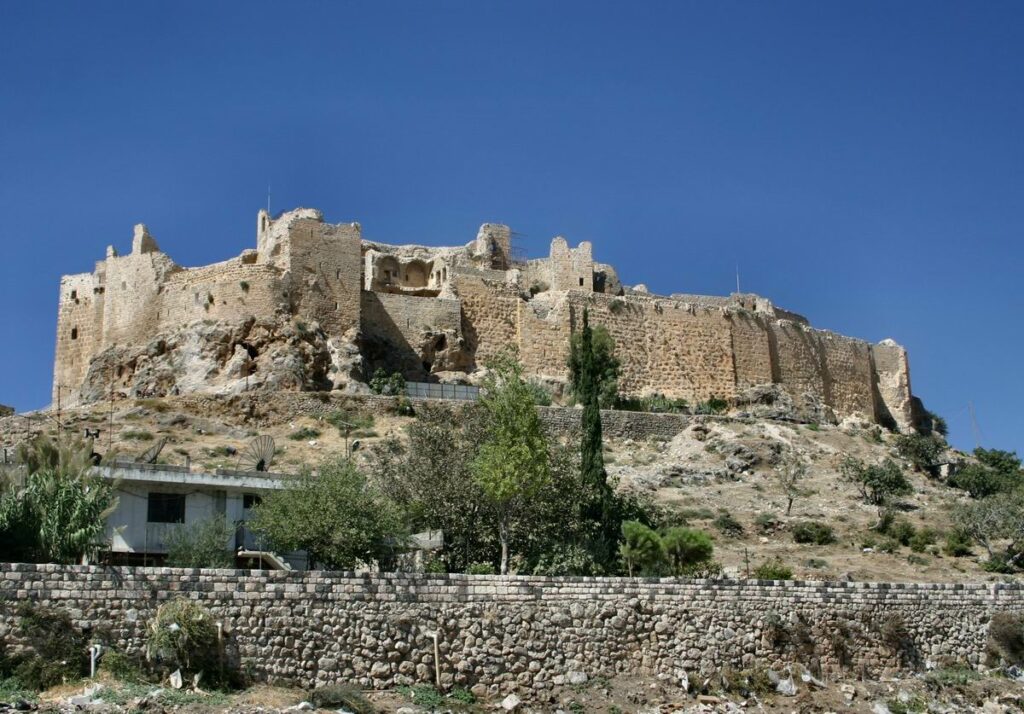
What if Syria’s greatest treasures weren’t the ones everyone talks about? Here Unique Places to Visit in Syria
Beyond the world-famous ruins of Palmyra, the ancient streets of Damascus, and the Roman theatre of Bosra lies another side of Syria—one filled with forgotten kingdoms, secluded monasteries, medieval fortresses, Phoenician sanctuaries, and remarkably preserved archaeological sites that rarely appear in traditional travel guides.
These hidden gems reveal a different story of Syria. Here, you can wander through a deserted Byzantine village where time seems to have stood still, explore the capital of a lost Bronze Age kingdom, discover one of the world’s oldest Christian monasteries perched high in the mountains, or visit ancient temples and castles that remain largely unknown to international travelers.
Whether you’re an archaeology enthusiast, a history lover, or simply looking to explore places that most visitors never see, these unique places to visit in Syria promise an unforgettable journey through one of the world’s oldest civilizations.
Unique Places to Visit in Syria: Hidden Ancient Cities
Dura Europos
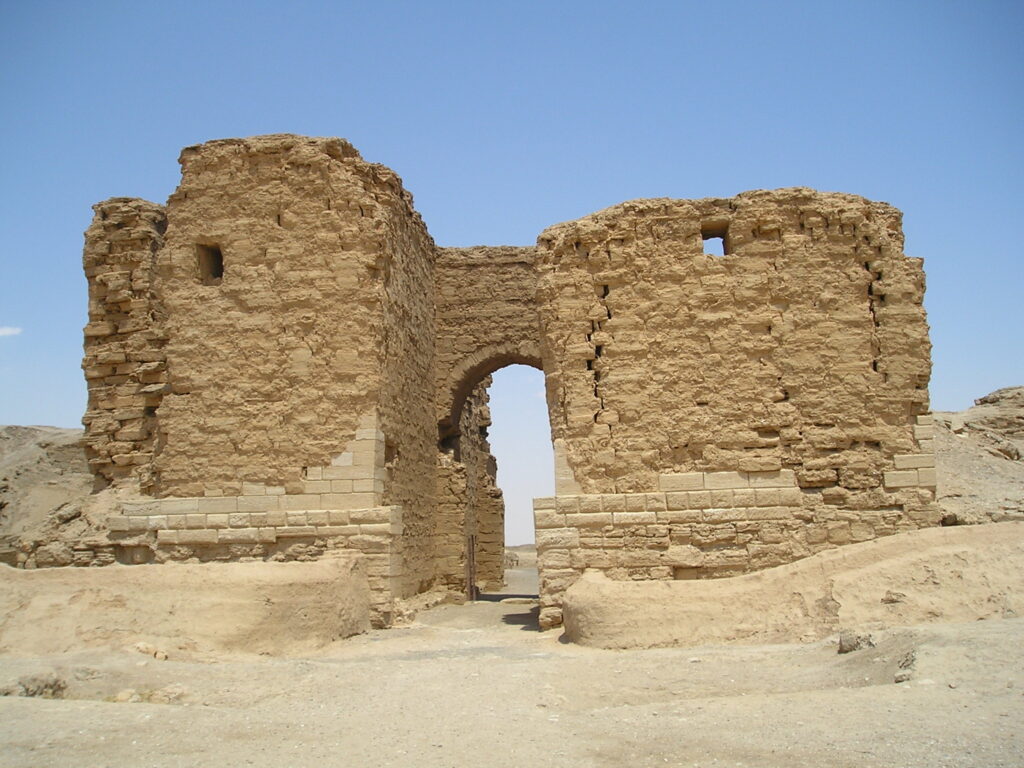
Perched high above the Euphrates River in eastern Syria, Dura Europos is one of the world’s most extraordinary archaeological sites, yet it remains largely unknown to most travelers.
Often overshadowed by famous destinations such as Palmyra and Bosra, this ancient frontier city preserves an exceptional blend of Greek, Roman, Parthian, Persian, Jewish, and early Christian heritage, earning it a unique place in the history of civilization.
What Makes It Special?
- Founded around 303 BC by Seleucus I Nicator as a Hellenistic military settlement before becoming a major Parthian and Roman frontier city.
- Home to the oldest archaeologically preserved Christian house church known anywhere in the world.
- Contains one of antiquity’s most celebrated Jewish synagogues, renowned for its remarkably preserved biblical wall paintings.
- Built on a dramatic plateau overlooking the Euphrates and enclosed by impressive defensive walls following a carefully planned Hellenistic street grid.
- Preserves temples dedicated to Greek, Roman, Palmyrene, and other Near Eastern deities, reflecting the city’s exceptional cultural and religious diversity.
What You’ll Experience
Exploring Dura-Europos feels like uncovering a forgotten frontier city frozen in time.
As you walk along its ancient streets and massive fortification walls, you’ll overlook the Euphrates Valley from the same cliffs that once protected the settlement nearly two thousand years ago.
Unlike many archaeological sites dominated by a single civilization, Dura-Europos reveals layer upon layer of cultural exchange, where temples, military buildings, homes, and places of worship tell the story of communities from across the ancient world living side by side.
It is this remarkable diversity—rather than monumental architecture alone—that makes a visit to Dura Europos such a memorable experience.
Aramya Tip
For the richest experience, combine Dura-Europos with Mari (Tell Hariri) on the same journey through the Euphrates Valley.
Together, these two remarkable sites trace nearly three millennia of history—from one of the Near East’s greatest Bronze Age kingdoms to a multicultural Hellenistic and Roman frontier city—offering one of Syria’s most fascinating archaeological routes.
Shahba (Philippopolis)
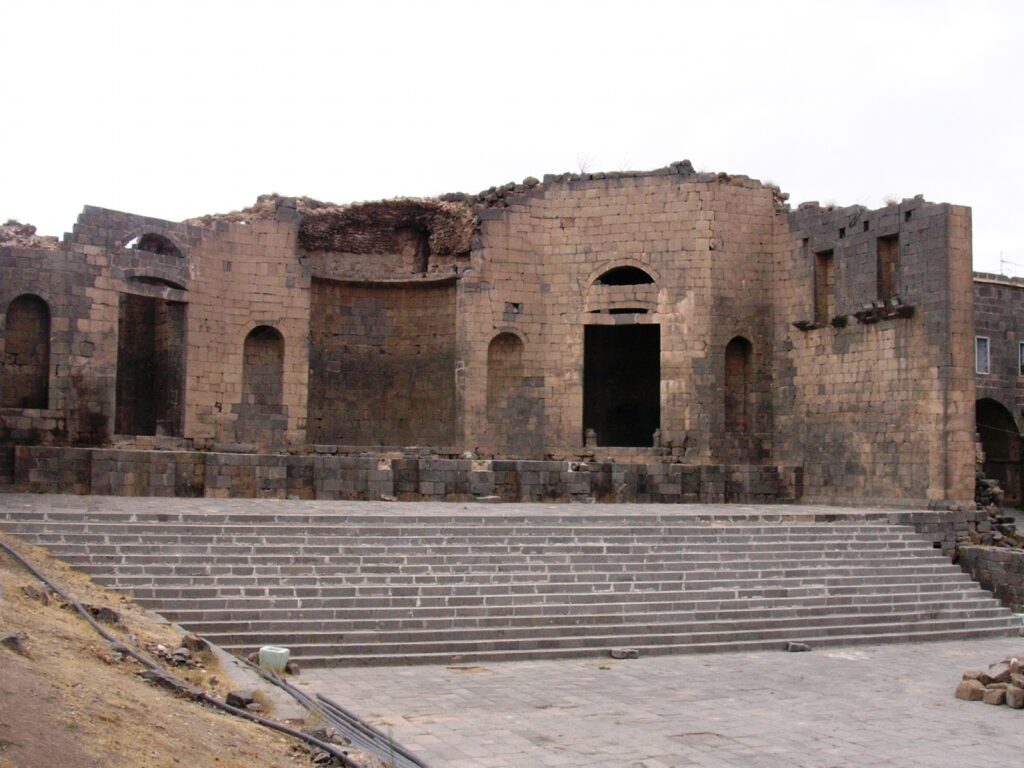
Nestled in the volcanic landscape of southern Syria, Shahba, ancient Philippopolis, is one of the country’s best-preserved Roman cities—yet it remains largely overlooked by international visitors.
Unlike Bosra or Palmyra, Shahba was not a city that evolved over centuries; it was an ambitious imperial project founded by a Roman emperor who sought to transform his birthplace into a model Roman city.
Today, its quiet streets and remarkably preserved ruins offer a rare opportunity to explore a Roman city without the crowds.
What Makes It Special?
- Founded by Emperor Philip the Arab in the mid-3rd century AD and renamed Philippopolis in his honor.
- Planned according to a classic Roman grid layout, with colonnaded streets, ceremonial gates, public buildings, and residential quarters.
- Home to a remarkably preserved Roman theatre, baths, temples, and the Philippeion, a monumental complex dedicated to the imperial family.
- Features an excellent archaeological museum displaying beautiful Roman mosaics discovered in the city and surrounding region.
- Built largely from the region’s distinctive black basalt, giving the city an architectural character unlike any other Roman site in Syria.
What You’ll Experience
Walking through Shahba feels like discovering a Roman city that time quietly forgot.
Wide streets, basalt ruins, the elegant theatre, and the remains of public monuments reveal the vision of an emperor determined to recreate the grandeur of Rome in southern Syria.
Unlike more famous archaeological sites, Shahba offers a peaceful atmosphere where visitors can appreciate Roman urban planning at their own pace.
A visit to the local museum further enriches the experience, with beautifully preserved mosaics that bring the city’s prosperous past vividly to life.
Aramya Tip
Combine Shahba with a visit to Bosra if you’re exploring southern Syria.
Together, these two Roman cities showcase two very different expressions of Roman urbanism—Bosra as the capital of the Roman Province of Arabia, and Shahba as the purpose-built imperial hometown of Emperor Philip the Arab.
Jableh
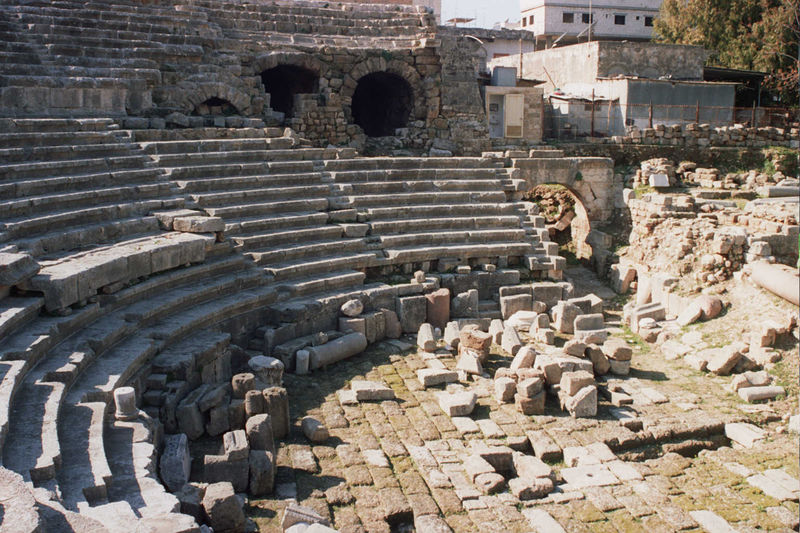
Nestled on Syria’s Mediterranean coast, Jableh is often overlooked by travelers heading to the better-known cities of Latakia or Tartus.
Yet behind its relaxed seaside atmosphere lies a city with more than three millennia of history, where Phoenician, Greek, Roman, Byzantine, and Islamic civilizations have all left their mark.
Its remarkably preserved Roman theatre and charming historic center make Jableh one of Syria’s most rewarding hidden gems.
What Makes It Special?
- Inhabited since at least the 2nd millennium BC, when it formed part of the Kingdom of Ugarit.
- Home to one of Syria’s largest and best-preserved Roman theatres, constructed on a freestanding substructure rather than a natural hillside, reflecting a defining feature of Roman theatre design.
- Preserves layers of Phoenician, Hellenistic, Roman, Byzantine, and Islamic history within a compact historic center.
- Located just a short distance from the Mediterranean shoreline, offering a unique combination of archaeological heritage and coastal scenery.
- The Roman theatre continued to be reused throughout the Islamic and medieval periods, reflecting the city’s long and continuous history.
What You’ll Experience
Walking through Jableh offers a refreshing contrast to Syria’s grand archaeological sites.
The city’s Roman theatre rises unexpectedly from the heart of the modern town, where ancient stonework blends naturally with everyday life.
Beyond the theatre, quiet streets, traditional markets, and the nearby Mediterranean create a relaxed atmosphere that invites slow exploration.
Rather than feeling like an open-air museum, Jableh feels like a living historic town where centuries of history remain woven into the urban fabric, making it an ideal destination for travelers looking to experience both Syria’s heritage and its coastal character.
Aramya Tip
Visit Jableh together with Ugarit and Latakia to discover the rich history of Syria’s Mediterranean coast. While Ugarit tells the story of one of the ancient world’s greatest kingdoms, Jableh offers the chance to experience a vibrant coastal town where Roman heritage and everyday Syrian life continue to coexist.
Serjilla
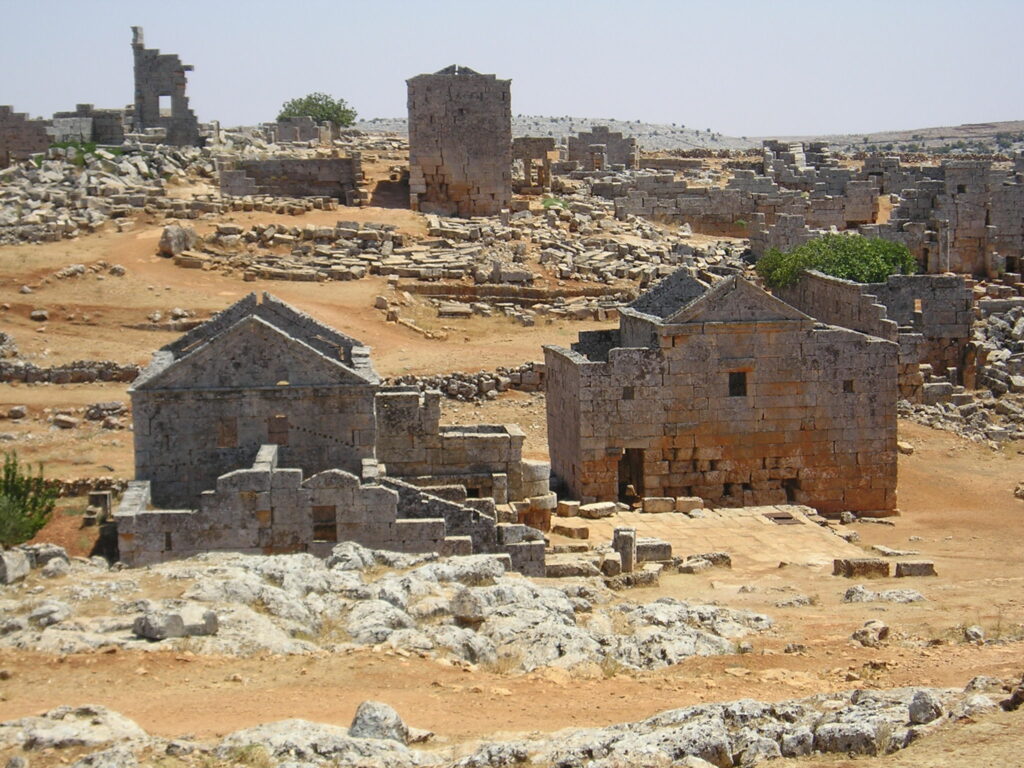
Hidden among the limestone hills of northwestern Syria, Serjilla is one of the best-preserved ancient villages in the country.
While most travelers have heard of Palmyra or Bosra, few know about this remarkably intact Byzantine settlement, where houses, baths, churches, and olive presses still stand much as they did more than 1,500 years ago.
As part of the UNESCO-listed Ancient Villages of Northern Syria, Serjilla offers an extraordinary glimpse into everyday rural life during Late Antiquity.
What Makes It Special?
- One of the best-preserved Byzantine villages in Syria.
- Part of the UNESCO World Heritage property Ancient Villages of Northern Syria.
- Features remarkably intact public baths, an inn, churches, tombs, and olive and wine presses.
- Provides a rare picture of the daily life and economy of a prosperous rural community between the Roman and early Byzantine periods.
- Built almost entirely from local limestone, giving the village its distinctive and harmonious appearance.
What You’ll Experience
Walking through Serjilla feels like stepping into a forgotten Byzantine village rather than an archaeological site.
Stone houses line quiet lanes, while the remarkably preserved public baths, churches, and agricultural buildings reveal how prosperous rural communities once lived and worked.
Unlike many ancient cities dominated by monumental temples or theatres, Serjilla’s greatest appeal lies in its authenticity—it preserves the homes, workshops, and communal spaces of ordinary people, allowing visitors to imagine daily life in northern Syria more than fifteen centuries ago.
Aramya Tip
Visit Serjilla together with nearby sites such as Al-Bara and Jerade to appreciate the diversity of the Ancient Villages of Northern Syria.
Arriving early in the morning or late in the afternoon also provides softer light that beautifully highlights the limestone architecture and surrounding landscape.
Know more about Best Places to Visit in Syria: The Ultimate Travel Guide
Hidden Archaeological Sites
Tell Mozan (Ancient Urkesh)
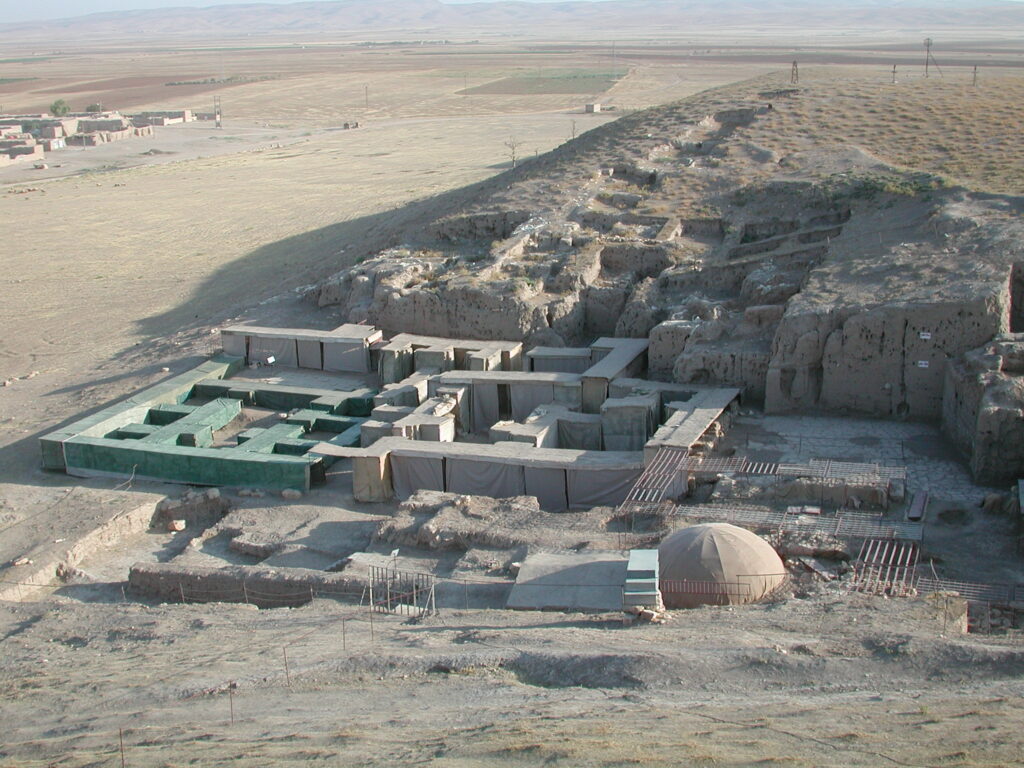
Hidden in the fertile plains of northeastern Syria, Tell Mozan, the ancient city of Urkesh, is one of the world’s most important Hurrian archaeological sites.
While it rarely appears in mainstream travel guides, Urkesh was once the capital of a powerful kingdom and a major religious and political center in Upper Mesopotamia.
Its exceptional preservation and decades of archaeological research have made it indispensable for understanding one of the ancient Near East’s most influential yet least-known civilizations.
What Makes It Special?
- The ancient city of Urkesh, one of the earliest and most important centers of the Hurrian civilization.
- Occupied from at least the early 4th millennium BC, with a history spanning thousands of years.
- Home to the impressive Royal Palace of Tupkish, one of the best-studied Hurrian royal palaces ever excavated.
- Contains the unique ābi, a monumental underground ritual structure associated with Hurrian religious ceremonies—the only known monumental example of its kind.
- Excavations have uncovered hundreds of royal seal impressions and inscriptions that helped identify the site as the lost city of Urkesh and reconstruct its royal dynasty.
What You’ll Experience
A visit to Tell Mozan is unlike exploring Syria’s grand Roman cities or medieval castles.
Instead, you’ll walk through the remains of one of the earliest royal capitals of northern Mesopotamia, where the outlines of palaces, temples, and ceremonial spaces gradually emerge from the archaeological mound.
The site’s peaceful setting allows visitors to appreciate how archaeologists uncovered an entire Hurrian city hidden beneath centuries of accumulated earth.
Standing beside the Royal Palace and the remarkable ābi, you gain a rare connection to a civilization that shaped the history, religion, and politics of the ancient Near East more than four thousand years ago.
Aramya Tip
If you’re fascinated by the origins of civilization, combine Tell Mozan with nearby Tell Brak.
Together, these two archaeological sites offer one of the most rewarding journeys through the earliest urban societies of Upper Mesopotamia, revealing how cities, kingdoms, and religious traditions developed long before the classical civilizations of Greece and Rome.
Ain Dara Temple
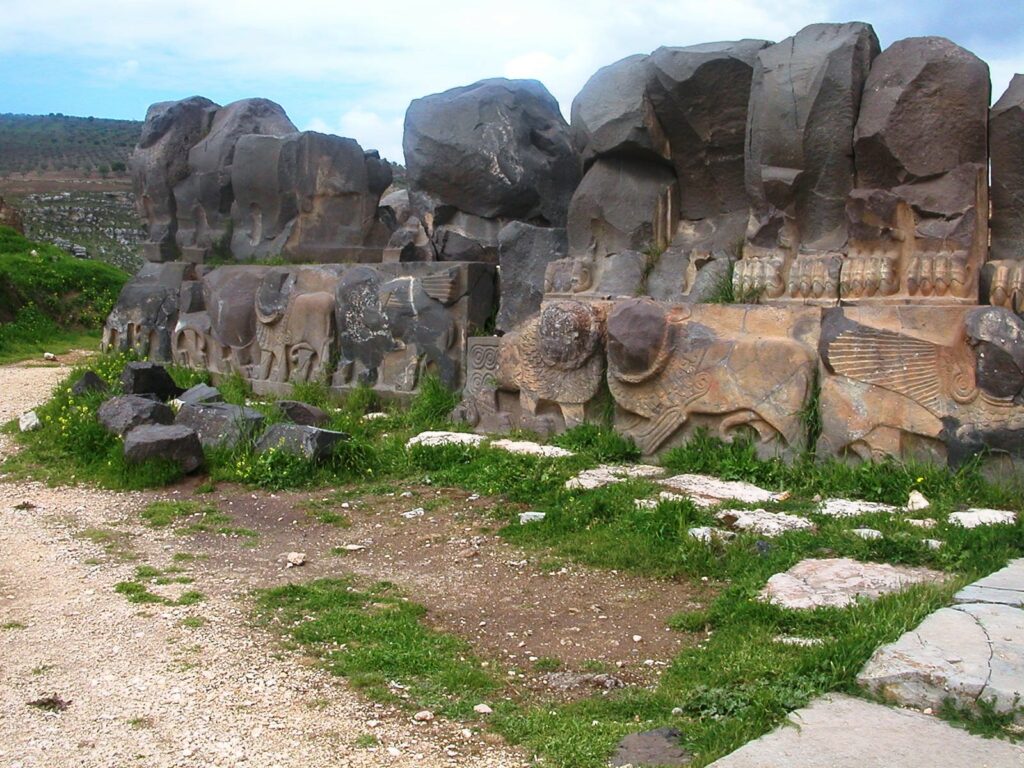
Tucked away in the Afrin Valley of northwestern Syria, the Temple of Ain Dara is one of the finest surviving examples of Syro-Hittite religious architecture.
Despite its archaeological importance, it remains far less known than Syria’s Roman and Byzantine landmarks.
For travelers interested in ancient civilizations, it offers a rare opportunity to explore a sanctuary that once stood at the crossroads of Anatolian, Aramaean, and Near Eastern cultures.
What Makes It Special?
- Ain Dara archaeological site is one of the best-preserved Syro-Hittite temples from the Early Iron Age.
- Famous for its giant carved footprints at the entrance, believed to symbolize the invisible presence of a deity entering the sanctuary.
- Richly decorated with basalt reliefs of lions, sphinxes, and mythological creatures carved in the distinctive Syro-Hittite artistic style.
- Built on an elevated acropolis overlooking the Afrin Valley, emphasizing its ceremonial and symbolic importance.
- Its architectural layout has attracted international scholarly interest because of its close resemblance to temples described in ancient Near Eastern texts.
What You’ll Experience
Unlike Syria’s grand Roman theatres or medieval castles, Ain Dara offers a more intimate encounter with the ancient Near East.
As you approach the sanctuary, the monumental stone steps, guardian lions, and carved footprints immediately create a sense of ceremony.
Walking through the temple ruins, you’ll notice the remarkable basalt decorations that once adorned its walls and imagine how worshippers entered this sacred space nearly three thousand years ago.
Even in its ruined state, the site conveys the artistic sophistication and religious symbolism of one of northern Syria’s most extraordinary ancient monuments.
Aramya Tip
Combine Ain Dara with a visit to Cyrrhus (Nabi Huri) if your itinerary includes northern Aleppo.
Together, these two lesser-known archaeological sites showcase two very different chapters of Syria’s ancient history—one from the Syro-Hittite world and the other from the Hellenistic and Roman periods—making for a rewarding day of exploration.
Qasr al-Hayr al-Sharqi
Hidden deep within the Syrian Desert, Qasr al-Hayr al-Sharqi is one of the largest and most impressive Umayyad desert complexes ever built.
Despite its historical importance and remarkable scale, it remains largely overlooked by international travelers, making it a fascinating destination for those eager to discover a lesser-known chapter of early Islamic architecture and desert life.
What Makes It Special?
- One of the largest surviving Umayyad desert complexes in the Middle East.
- Built during the reign of Caliph Hisham ibn Abd al-Malik around 728–729 AD.
- Combines a palace, mosque, bathhouse, residential quarters, workshops, and agricultural infrastructure within a single planned settlement.
- Demonstrates a unique blend of Byzantine, Sasanian, and early Islamic architectural traditions.
- Included an advanced water supply system that transported water from springs nearly 6 km away to sustain life in the desert.
What You’ll Experience
Unlike Syria’s famous ancient cities, Qasr al-Hayr al-Sharqi offers a completely different atmosphere.
Surrounded by the vast openness of the Syrian steppe, the remains of its fortified walls, palace buildings, mosque, and service quarters reveal the scale of an ambitious Umayyad settlement designed not only as a royal residence but also as a thriving economic and agricultural center.
Walking through the site, visitors gain a rare appreciation for how the Umayyads transformed an isolated desert landscape into a sophisticated community supported by innovative engineering and water management.
Aramya Tip
Visit Qasr al-Hayr al-Sharqi together with Palmyra if your itinerary includes central Syria.
Although they belong to different historical periods, the contrast between Palmyra’s classical grandeur and the Umayyad vision of desert architecture offers one of the most rewarding historical journeys in the Syrian Desert.
Amrit
Just a few kilometers south of Tartus lies Amrit, one of the most remarkable Phoenician archaeological sites in the Mediterranean.
Overshadowed by nearby Arwad and the Crusader castles of the Syrian coast, Amrit rarely appears on mainstream travel itineraries.
Yet it preserves some of the finest surviving examples of Phoenician religious architecture and offers a unique glimpse into a civilization that shaped maritime trade across the ancient Mediterranean.
What Makes It Special?
- Home to one of the best-preserved Phoenician sanctuaries in the Levant, known as the Ma’abed, featuring a shrine rising from the center of a large sacred water basin.
- Contains a remarkable rock-cut Phoenician stadium, widely regarded as one of the oldest surviving stadiums in the eastern Mediterranean.
- Includes the distinctive Meghazil (“the Spindles”), monumental funerary towers dating to the Achaemenid period.
- Served as the mainland settlement associated with the nearby Phoenician island city of Arwad (Aradus/Arwad), one of the Mediterranean’s most powerful maritime centers.
- Showcases a fascinating blend of Phoenician, Persian (Achaemenid), and Hellenistic architectural influences within a single archaeological landscape.
What You’ll Experience
Exploring Amrit is unlike visiting Syria’s grand Roman cities.
Instead of monumental theatres or colonnaded streets, you’ll wander through a peaceful Phoenician sanctuary where a small stone shrine rises from the middle of a sacred pool—a design found nowhere else in the region.
Nearby, the rock-cut stadium and the enigmatic funerary towers create an archaeological landscape that feels both intimate and extraordinary.
Surrounded by the Mediterranean countryside and only a short distance from the coast, Amrit offers visitors a rare opportunity to experience the spiritual and architectural legacy of Phoenicia in a remarkably tranquil setting.
Aramya Tip
Visit Amrit together with Arwad Island to discover the relationship between the Phoenicians’ mainland religious center and one of their greatest island cities.
The two sites complement each other beautifully, offering a deeper understanding of Phoenician civilization than either could provide on its own.
Hidden Castles
Masyaf Castle
Perched on a rocky hill overlooking the town of Masyaf, Masyaf Castle is one of Syria’s best-preserved medieval fortresses.
Although history enthusiasts recognize it as the headquarters of the Syrian Nizari Ismailis, it remains overshadowed by more famous castles such as Crac des Chevaliers and Saladin Castle.
For travelers seeking a destination that combines remarkable military architecture with a fascinating political history, Masyaf is one of Syria’s most rewarding hidden gems.
What Makes It Special?
- One of the best-preserved Nizari Ismaili castles in Syria.
- Served as the headquarters of Rashid al-Din Sinan (“The Old Man of the Mountain”) during the 12th century.
- Features sophisticated defensive architecture, including bent entrances, rock-cut passages, towers, and concentric fortifications.
- Preserves architectural layers from the Byzantine, Nizari Ismaili, Mamluk, and Ottoman periods.
- Carefully restored through a long-term conservation project led by the Aga Khan Trust for Culture in cooperation with Syria’s Directorate-General of Antiquities and Museums.
What You’ll Experience
Exploring Masyaf Castle is like walking through a fortress designed as a maze of defenses.
Narrow gateways, steep stairways, vaulted chambers, rock-cut passages, and panoramic terraces reveal how every part of the citadel was engineered for protection while remaining remarkably integrated into the natural rock.
Unlike many medieval castles that impress mainly through their size, Masyaf captivates visitors with its ingenious design and the layers of history preserved within its walls.
From the highest points of the fortress, sweeping views extend across the surrounding valleys and the Syrian Coastal Mountains, making the visit as rewarding for its scenery as for its history.
Aramya Tip
Combine Masyaf Castle with a visit to Wadi al-Nasara or Crac des Chevaliers to discover two very different traditions of medieval fortification.
While Crac des Chevaliers showcases the monumental architecture of the Crusader period, Masyaf offers a fascinating insight into the defensive ingenuity and political history of the Nizari Ismailis in medieval Syria.
Arwad Citadel
Standing at the heart of Arwad, Syria’s only inhabited island, Arwad Citadel is a remarkable medieval fortress that many visitors overlook in favor of the country’s better-known castles.
Yet its unique island setting, centuries of continuous occupation, and rich maritime history make it unlike any other fortress in Syria.
Surrounded by the Mediterranean on all sides, the citadel offers a rare opportunity to explore a stronghold where Phoenician, Crusader, Ayyubid, and Ottoman history all converge.
What Makes It Special?
- Located on Syria’s only inhabited island, which has been continuously occupied since at least the 2nd millennium BC.
- The present citadel occupies the island’s center and incorporates architectural elements from the Ayyubid and Ottoman periods, while preserving evidence of earlier fortifications.
- Arwad is unusual for preserving two medieval fortifications as well as traces of its historic maritime walls, a rare combination in eastern Mediterranean military architecture.
- The fortress forms part of a living island settlement where traditional fishing and boatbuilding continue alongside centuries-old streets and stone buildings.
- From its walls, visitors enjoy panoramic views of the Mediterranean, the island’s historic harbor, and the Syrian coastline opposite Tartus.
What You’ll Experience
Visiting Arwad Citadel is unlike exploring any other castle in Syria.
Reached by boat, the journey begins across the Mediterranean before leading into a maze of narrow lanes lined with traditional stone houses.
Rising above the island, the fortress offers sweeping sea views and a tangible sense of Arwad’s long maritime heritage.
Rather than standing in isolation, the citadel remains woven into the daily life of the island, where fishing boats fill the harbor and centuries-old streets still echo with the rhythms of a living coastal community.
This combination of medieval military architecture and enduring island life makes Arwad a truly distinctive destination.
Aramya Tip
Plan to visit Arwad Citadel together with the nearby archaeological site of Amrit.
Together, they tell the story of ancient Phoenician civilization from two complementary perspectives: Amrit as an important mainland religious center and Arwad as one of the eastern Mediterranean’s most influential island city-states.
Hidden Spiritual Sites
Deir Mar Musa al-Habashi
Perched dramatically on the cliffs of the Qalamoun Mountains, Deir Mar Musa al-Habashi is one of Syria’s most extraordinary spiritual and architectural treasures.
Although it has welcomed pilgrims and travelers for centuries, it remains largely unknown outside specialist and religious travel circles.
Its remote mountain setting, magnificent medieval frescoes, and atmosphere of peace make it one of the country’s most rewarding hidden gems.
What Makes It Special?
- Founded before AD 575, making it one of Syria’s oldest surviving monastic sites.
- Home to one of the best-preserved medieval fresco cycles in the Levant, dating primarily to the 11th and 12th centuries.
- Built into the rugged cliffs of the Qalamoun Mountains, creating one of the most spectacular monastery settings in the Middle East.
- The monastery church, completed in 1058 AD, preserves Arabic inscriptions alongside exceptional religious artwork, reflecting Syria’s rich cultural and artistic heritage.
- Carefully restored through collaboration between the Syrian Directorate-General of Antiquities and Museums and the Italian Central Institute for Restoration, helping preserve its unique artistic legacy.
What You’ll Experience
A visit to Deir Mar Musa begins with a climb up a long stone staircase that gradually reveals breathtaking views across the surrounding mountains and desert.
Inside the monastery, visitors encounter a peaceful atmosphere where history, architecture, and spirituality blend seamlessly.
The beautifully restored frescoes covering the church walls are among the monastery’s greatest treasures, while the simplicity of the stone buildings and the dramatic natural setting create a sense of quiet reflection rarely found at more visited historic sites.
Whether you’re interested in religious heritage, medieval art, or mountain landscapes, Deir Mar Musa offers an experience unlike any other in Syria.
Aramya Tip
Plan your visit during the cooler hours of the morning or late afternoon, and allow enough time to enjoy both the monastery and its panoramic mountain setting.
If your itinerary includes Maaloula, combining the two destinations offers a fascinating introduction to Syria’s rich Christian heritage, showcasing two of the country’s most remarkable historic monastic communities.
Khalid ibn al-Walid Mosque
Although Khaled ibn al-Walid Mosque is one of Syria’s most recognizable Islamic landmarks, it is often overshadowed by the Umayyad Mosque in Damascus.
For travelers interested in Islamic history, however, it offers a unique experience: a magnificent Ottoman-style mosque that is also the resting place traditionally associated with Khalid ibn al-Walid, one of Islam’s greatest military commanders.
Combining striking architecture with profound historical significance, it deserves far more attention than it typically receives.
What Makes It Special?
- Traditionally associated with the tomb of Khaled ibn al-Walid (c. 592–642 AD), known as “The Sword of Allah” and one of the most celebrated commanders in Islamic history.
- The present mosque was completed in 1912 during the late Ottoman period, replacing earlier Mamluk and medieval structures that had stood on the site.
- Distinguished by its elegant Ottoman architectural style, featuring a large central dome, nine smaller domes, and two slender minarets.
- Showcases the traditional Syrian ablaq masonry, with alternating bands of black basalt and white limestone throughout the structure.
- Carefully restored following damage sustained during the Syrian conflict, preserving one of Homs’ most important religious and architectural landmarks.
What You’ll Experience
Approaching the mosque, the twin minarets and silver-colored central dome dominate the skyline of Homs, creating one of the city’s most recognizable landmarks.
Inside, the spacious prayer hall, elegant domes, and distinctive black-and-white stonework reflect the refined aesthetics of late Ottoman architecture in Syria.
Beyond its architectural beauty, the mosque offers visitors an opportunity to connect with the legacy of Khalid ibn al-Walid, whose leadership played a defining role in the early Islamic conquests.
Whether you come for its history, architecture, or spiritual significance, the mosque provides one of the most meaningful cultural experiences in central Syria.
Aramya Tip
Visit Khalid ibn al-Walid Mosque together with the nearby Church of Saint Mary of the Holy Belt (Um al-Zennar) in Homs.
Experiencing these two historic places of worship on the same day offers a powerful insight into the city’s rich religious heritage and the centuries-long coexistence of diverse faith traditions in Syria.
Conclusion
Exploring these lesser-known destinations offers more than remarkable sights—it provides a deeper understanding of Syria’s diverse civilizations, rich cultural heritage, and breathtaking landscapes. For those willing to venture beyond the traditional tourist trail, the rewards are truly extraordinary.
Ready to experience a different side of Syria? Get in touch with our team to plan a personalized journey to the country’s hidden gems, and let us help you discover extraordinary places that most travelers never see.